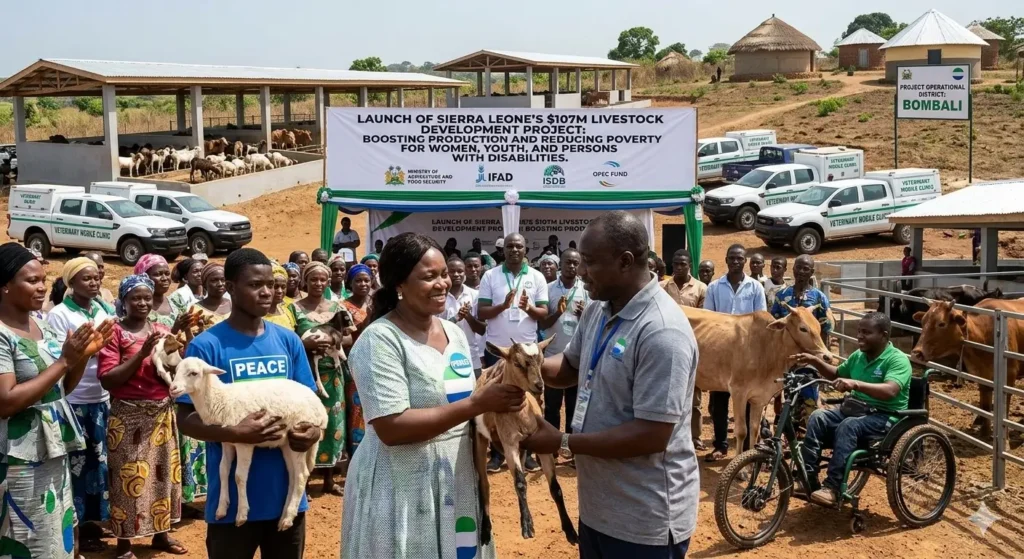
The government’s Ministry of Agriculture and Food Security convened stakeholders in the southern region of Bo to roll out a major livestock development initiative aimed at transforming the sector and improving rural livelihoods across the country.
The Livestock and Livelihoods Development Project, a multi-donor programme backed by the OPEC Fund for International Development, International Fund for Agricultural Development, and the Islamic Development Bank, represents a $107 million investment to be implemented over an eight-year period.
The project will cover eleven districts across the south, east, north, and north-west regions, aiming to address long-standing challenges in the country’s livestock sector, officials say.
Speaking during this week’s regional workshop, project manager Tejan Koroma said the initiative is designed to address years of underinvestment in livestock production.
“Our primary objective is to improve the livelihoods of livestock farmers while strengthening the entire value chain,” he said, noting that the sector has suffered from limited funding for over 15 years.
The project’s focus is to improve livestock production and productivity; expand access to markets; enhance access to finance; and strengthen institutional and policy frameworks. It will also support key value chains, including poultry, small ruminants such as goats and sheep, and large livestock like cattle.
Officials say the programme is deliberately structured to ensure inclusivity, with 40 percent of beneficiaries targeted to be women, 30 percent youth, and 5 percent persons with disabilities.
The project will adopt a cluster-based implementation model, grouping communities based on proximity, shared activities, and market access to improve coordination, efficiency, and local ownership.
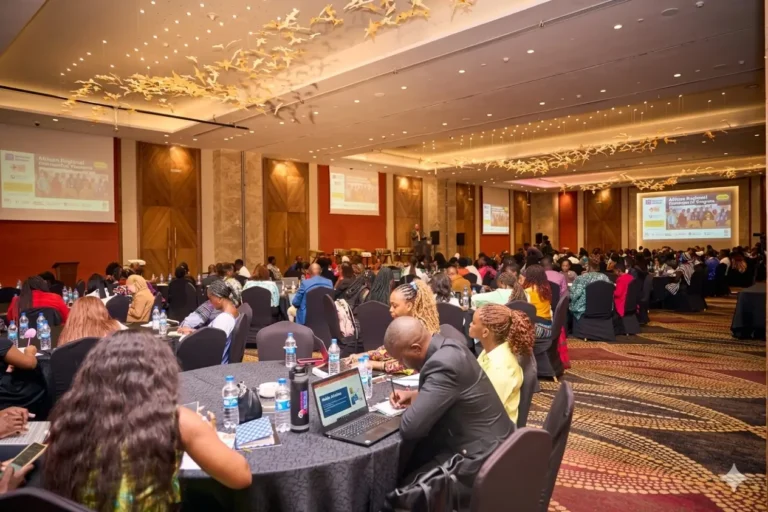
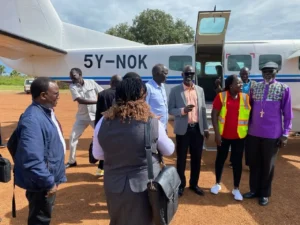
The Bo engagement brought together government officials, traditional leaders, councillors, civil society groups, youth and women’s organisations, and representatives of persons with disabilities. Those introduced to the project framework pledged to disseminate information within their communities ahead of implementation.
Koroma said project teams would begin beneficiary mapping and baseline surveys in the coming weeks to establish benchmarks for tracking progress and impact.
Stakeholders say the initiative could play a transformative role in expanding economic opportunities for rural communities and reducing poverty across Sierra Leone.