By Lawrence Williams
The International Monetary Fund (IMF) has approved about $211.45 million climate funding for Sierra Leone in a new arrangement under the resilience and sustainability facility (RSF) to help build resilience to climate shocks, enhance fiscal risk management, social protection systems, and financial sector resilience.
The announcement was made on Thursday following the completion of the third review of Sierra Leone’s extended credit facility (ECF) by the IMF executive board, greenlighting the immediate disbursement of $31.7 million, which brings the total funding released under the ECF arrangement to about US$158.6 million.
The IMF noted that the country’s recent macroeconomic reforms have begun to yield positive results, with tighter fiscal and monetary policies helping to stabilize the exchange rate, reduce inflation, lower borrowing costs, and restore access to private sector credit.
However, it cautioned that the country continues to face significant economic challenges, including low foreign exchange reserves and a high risk of debt distress.
The fund states that Sierra Leone’s economy remains on a stable trajectory despite growing external pressures, particularly the economic spillover effects of the Middle East conflict. It adds economic outlook remains vulnerable to several risks, including geopolitical tensions, domestic political uncertainty ahead of elections, and the possibility of reform fatigue as fiscal consolidation continues.
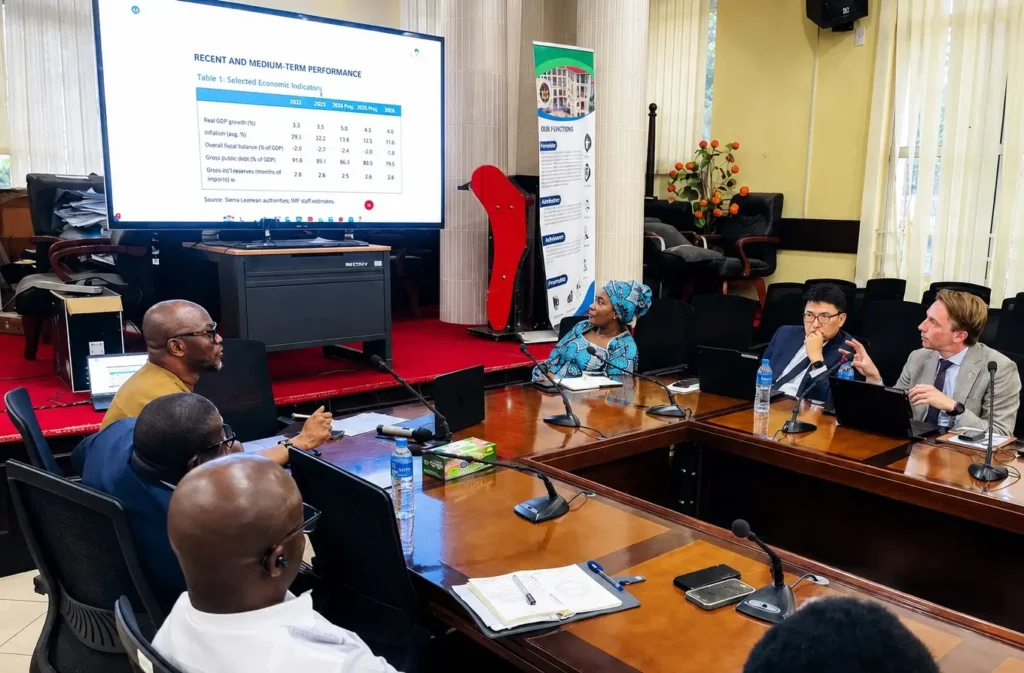
Economic growth, which accelerated last year, is now projected to slow to 4 percent in 2026, while year-end inflation is expected to reach 11.6 percent.
Kenji Okamura, the fund’s deputy managing director, commended the government’s recent policy measures but stressed that maintaining fiscal discipline remains essential.
“The authorities’ policy tightening has helped stabilize the exchange rate, lower borrowing costs and inflation, and restore private credit access. However, reserve coverage remains low, and debt is at high risk of distress,” Okamura said.
He acknowledged that the government has limited fiscal space to accommodate the impact of higher global fuel prices and other economic pressures arising from the Middle East conflict. He added that continued fiscal consolidation and protection of critical social spending are necessary to keep public debt on a sustainable path.
The fund advised that temporary fuel subsidy must remain transparent and within agreed spending limits until stronger social protection systems are established. It adds that the government should accelerate reforms in energy, tax administration, mining revenue collection, public financial management, and debt management in order to strengthen fiscal sustainability.
Further, it recommended tighter monetary policy should inflationary pressures persist, alongside efforts to rebuild foreign exchange reserves, improve exchange rate flexibility, and strengthen the country’s banking sector through ongoing financial reforms.
“Monetary policy should be tightened if inflationary pressures persist, and efforts should continue to strengthen safeguards and implement the new monetary policy framework. The authorities should rebuild reserves, allow the exchange rate to adjust to shocks, and repay overdue budget support loans to the BSL,” the IMF stated.