By Lawrence Williams
A five-year-old girl, her mother and grandmother have died after a wall collapsed at Metchem on Monday during heavy rains that lasted for hours, local authorities have said.
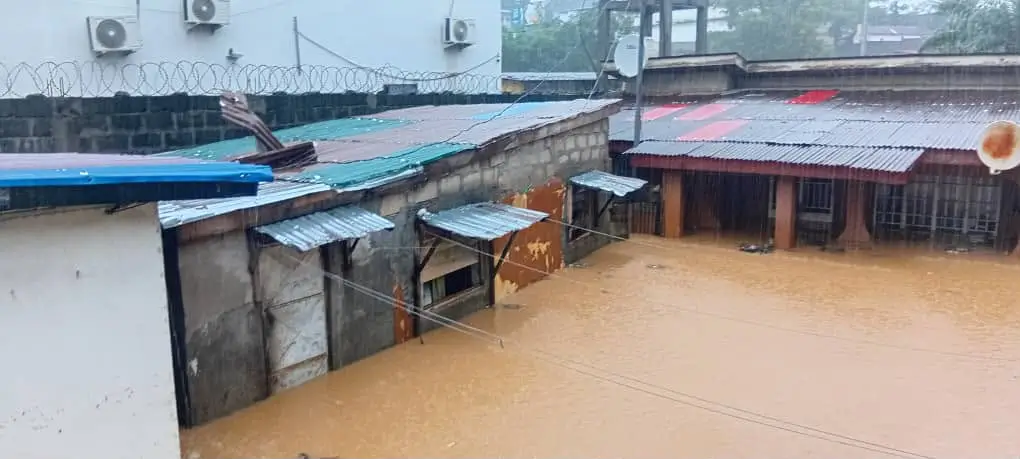
In nearby Juba, just 9.2km from central Freetown, over 300 homes were “completely flooded,” the National Disaster Management Agency (NDMA) said, with two children still reported missing.
“The rains caused widespread flash flooding, severe erosion, and slope incidents across several communities in Freetown,” the NDMA said.
Hundreds more have been displaced and several properties destroyed. Safe drinking water sources, including community boreholes, were also contaminated.
Search and rescue efforts for the missing children have been continuing for days now. Emergency teams have been deployed to assess the impact of the flood in the affected communities.
The latest tragedy has renewed calls for stronger controls of settlements in high-risk areas.
Urban planners and environmental activists say that while emergency response remains essential, reducing disaster risks will require sustained investment in climate resilience, better waste management, and public awareness on disaster preparedness.
The agency warned there could be heavy rainfalls between August and September, citing data from the Meteorological Agency. It advises citizens to stay on high alert and abide by safety guidelines issued by the relevant government authorities.
Rapid urbanization, poor drainage systems and indiscriminate waste disposal are said to have increased the city’s vulnerability to disasters during rainfall.
In August 2014 the country witnessed one of its worst disasters when a mudslide occurred at Regent, killing at least 1,000 people and displacing thousands more. To date, many victims have still not recovered.
Recent years have also seen several people lost their lives in building collapses across the capital, prompting engineers, urban planners and environmental experts to call for strict enforcement of building codes, improved construction standards and more effective land-use planning to reduce the risk of future tragedies.
For most Freetown residents, the latest incident serves as a painful reminder of the city vulnerability to disasters.