By Rose Aba Akafo
At just 11 years old, Rugiatu Nenneh Turay believed she was about to take part in one of the happiest moments of her childhood. Like many girls in her neighbourhood, she looked forward to joining the Bondo society. She had watched the colourful celebrations, the dancing, the white body decorations and the excitement that followed initiation ceremonies. But nobody had explained to her what happened before the celebrations began.
Then came the cutting. “It changed everything,” she recalls.
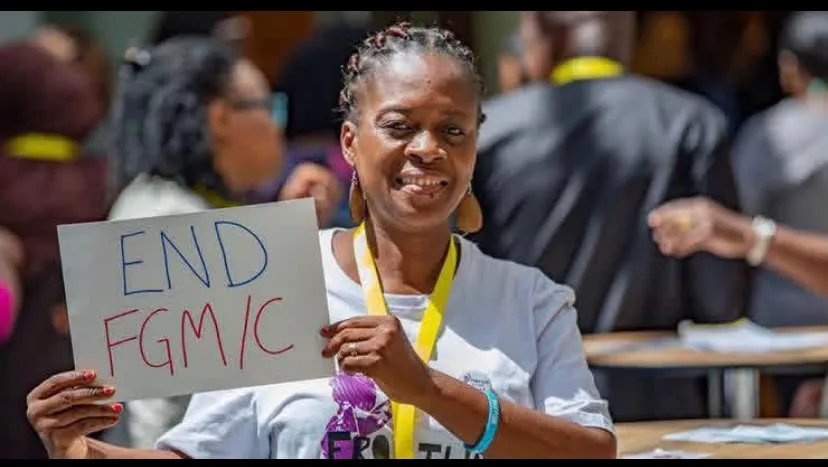
That painful experience became the beginning of a journey that would eventually make her one of the foremost campaigners against female genital mutilation (FGM) in Sierra Leone and, of course, an outstanding advocate for women and girls.
Today, Rugiatu is the founder of the Amazonian Initiative Movement, an organisation that has spent more than two decades working with communities to end FGM/C while promoting girl child education and preserving cultural traditions without violence.
A Childhood That Never Followed the Rules
Growing up in Lunsar, Rugiatu never fitted the picture of what people expected a girl to be. While other girls played with dolls, she wanted bicycles. She climbed trees, played football and constantly questioned traditions that limited girls.
People called her a “tomboy.” But inside her own home, she was learning a different lesson.
Her father cooked, washed clothes and cared for the children while her mother traded in the market. Watching her parents share responsibilities taught her that women and men could be equals.
That early lesson would later shape everything she stood for.
The Question That Changed Her Father’s Mind
After undergoing FGM, Rugiatu Nenneh Turay did something many girls were too frightened to do. She spoke. Not only did she tell her father what had happened, she showed him the wound.
“I didn’t just tell my father. I showed him my wound,” she says.
Her father was shocked. He told her he never knew the initiation involved cutting. That day, he made a promise that would change the future of his family. None of his younger daughters would ever go through FGM.
Years later, Rugiatu says no girl in her extended family has been cut again. So, for her, real change begins at home.
“Change has to begin within your own family,” she says.
Breaking a Silence That Nearly Cost Her Life
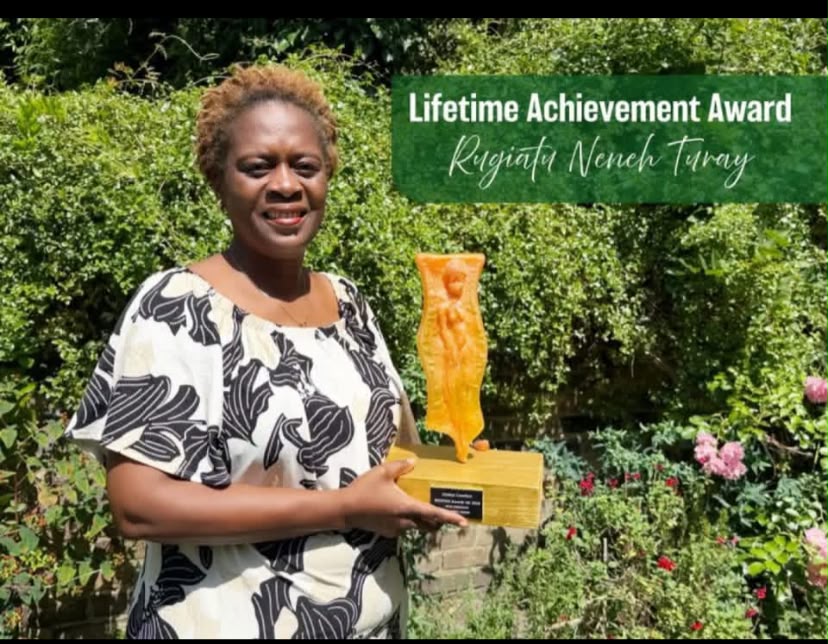
Speaking publicly about FGM was not welcomed. Friends abandoned her. Her family faced hostility. The community threatened them. There were even death threats. Yet she refused to stay silent.
“If someone can take the risk of cutting girls and watching them bleed, why shouldn’t I take the risk of saving lives?” She asks.
Gradually, something unexpected happened. Traditional soweis, women who had performed initiations for years, began to secretly visit her at night. Many admitted they had come to believe she was right. Some eventually joined her movement.
A Refugee Who Started a Movement
The Amazonian Initiative Movement was born far away from home.
While living as a refugee in Guinea during her country’s civil war, Rugiatu witnessed refugee families selling their food rations so they could pay for their daughters to be initiated.
She could not understand why parents already struggling to survive would spend their little food to continue a harmful practice.
When her employer refused to support the campaign because it was considered too controversial, she resigned. With no guarantees, she started her own organisation. She named it Amazonian Initiative Movement (AIM) because she wanted women to be fearless.
Replacing Bondo Bush with Schools
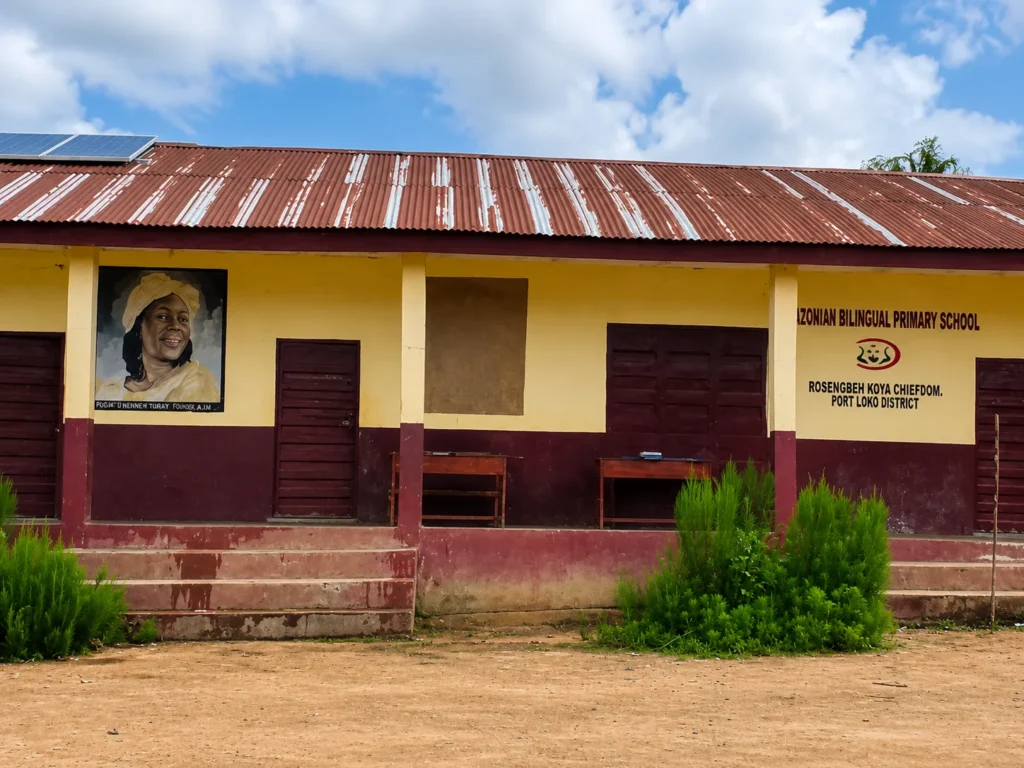
Rugiatu believes lasting change comes through education, not confrontation.
Instead of simply telling communities to abandon FGM, AIM works with them to build something in its place—schools, vocational centres, and parents’ groups.
Former soweis now monitor school attendance of girls instead of preparing them for initiation. Girls who miss classes are visited. If they need sanitary pads, they get supply. If they are struggling, someone follows up.
According to Rugiatu, AIM has established seven schools and two vocational training centres in Sierra Leone while helping communities rethink the future of girls.
The Village That Tore Down Its Shrine
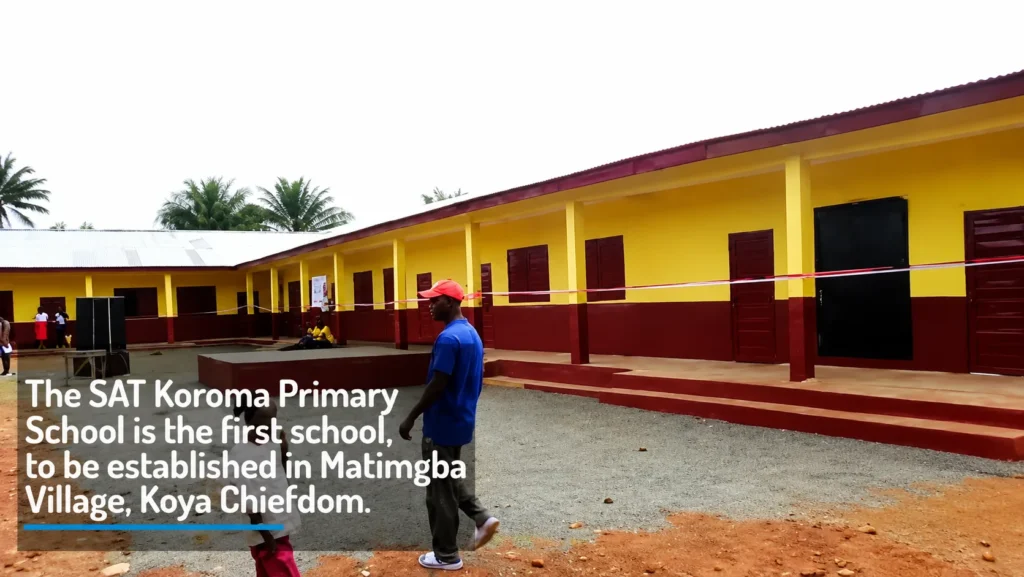
One story still brings a smile to her face.
In Matimgba village, Koya chiefdom, a community invited AIM to discuss ending FGM. After months of dialogue, something remarkable happened. Community members voluntarily dismantled a traditional shrine that had long been used for initiation ceremonies and then built there a school.
At the school’s opening, she said, the village women performed a drama telling the story of their own transformation.
Today, enrolment has grown from about 50 pupils to more than 300.
For Rugiatu, that is what lasting change looks like.
Bloodless Rite of Passage
One of the most innovative ideas championed by Rugiatu Nenneh Turay and the Amazonian Initiative Movement is the bloodless rite of passage, an alternative approach that preserves the positive cultural values of the Bondo society without subjecting girls to female genital cutting. Instead of focusing on a harmful practice, the programme teaches girls about leadership, self-esteem, life skills, reproductive health, human rights and cultural values in a safe environment.
Rugiatu believes culture should unite and empower women, not leave them with lifelong physical and emotional scars.
The initiative is already producing results. The first set of girls who completed the bloodless rite of passage in 2019 are now attending universities, some working with NGOs and speaking up for the rights of women and girls. Many have joined the Born Perfect Movement, a network of young advocates helping to educate communities about ending FGM while respecting cultural identity.
“We have shown that Bondo can be preserved as a cultural institution without cutting girls,” she said.
For Rugiatu, their success proves that girls can embrace their heritage, become confident leaders and enter adulthood without experiencing violence.
Fighting Ignorance, Not Culture
One of the biggest misconceptions, she thinks, is that campaigners want to destroy Bondo. She disagrees with that, saying Bondo can survive without cutting girls.
To her, culture evolves. Just as people no longer walk everywhere or send telegrams, traditions can also change while keeping their identity.
“Culture is much broader than removing a woman’s clitoris,” she says.
Rugiatu wishes communities could separate cultural values from violence. Prioritising dialogue over confrontation changes minds far better than confrontation, she states. That is why AIM even holds discussions inside Bondo bush with women willing to listen.
“We don’t use confrontation. We use dialogue,” she said.
Politics is Now the Biggest Challenge
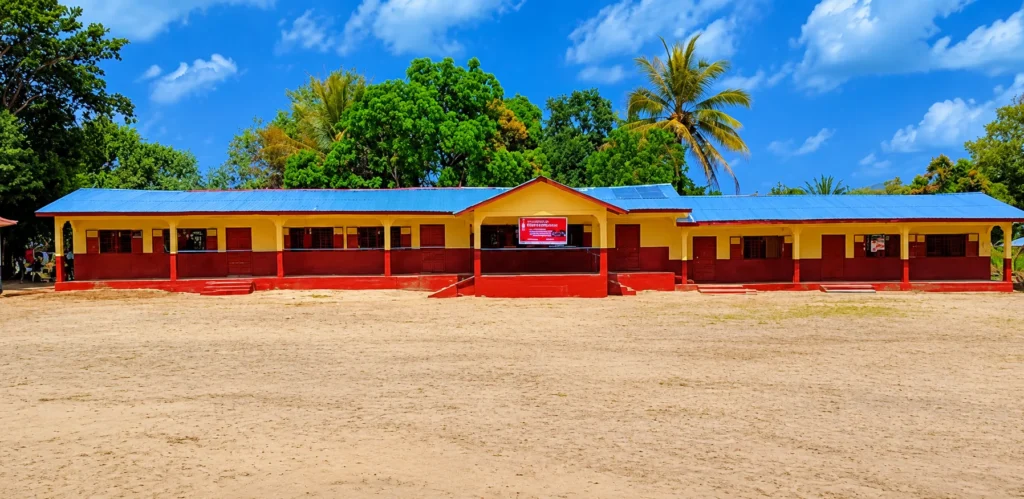
After more than 20 years of activism, Rugiatu believes tradition is no longer the biggest obstacle. Politics is.
She says communities often begin embracing change, only for politicians to revive divisions for their own interests.
“The greatest challenge today isn’t even tradition; it’s politics.”
Despite that, retirement has not slowed her down. She still supports vulnerable children using her own money. Award prizes, she says, are often invested in building schools rather than improving her own life.
“Helping others is what brings me happiness,” she said with a smile.
Her Vision for Sierra Leone
Asked about the legacy she hopes to leave behind, Rugiatu does not mention awards. She speaks about girls. She dreams of a Sierra Leone where every girl grows up complete, where women gather in traditional spaces without fear of violence, and where culture becomes a source of strength instead of pain.
“I want to see a Sierra Leone where women grow up complete, just as God created them,” she said.
More than two decades after showing her father the wound that changed both their lives, Rugiatu Nenneh Turay remains convinced that real change begins with one person willing to ask difficult questions, and a community willing to listen.