The Economic Community of West African States (ECOWAS) has a new leader at a defining moment for the region.
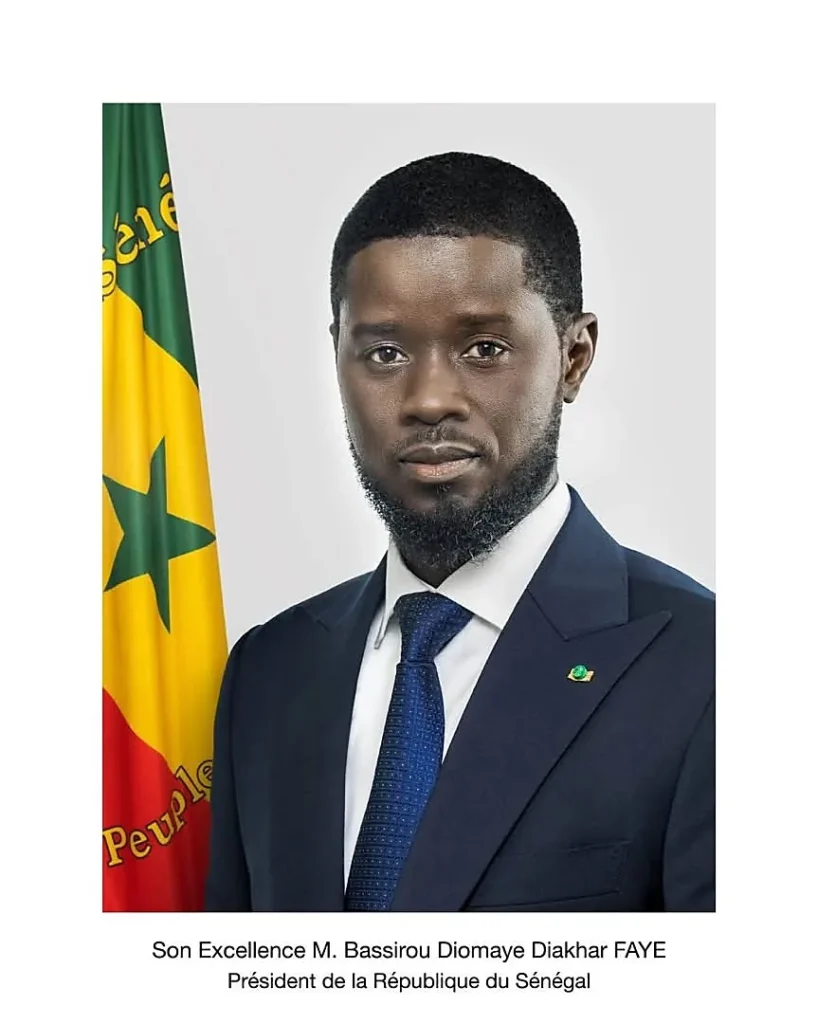
At the 69th Ordinary Summit of the ECOWAS Authority of Heads of State and Government held in Freetown, Sierra Leone, Senegal’s President Bassirou Diomaye Diakhar Faye was elected the new chairman of the regional bloc, succeeding Sierra Leone’s President Julius Maada Bio.
At just 46 years old, Faye assumes the chairmanship at a time when West Africa is grappling with insecurity, democratic transitions, economic uncertainty and the need to rebuild regional unity.
Observers say his election signals not only a change in leadership but also the emergence of a new generation of African leaders determined to reshape governance and regional cooperation.
From Public Servant to President
Born 25 March 1980 in Dakar, Bassirou Diomaye Faye rose from humble beginnings to become one of Senegal’s most influential political figures.
He studied private law at Cheikh Anta Diop University before graduating from the prestigious National School of Administration (ENA). His professional career began in public service as a tax and land inspector, where he earned a reputation for professionalism, integrity and commitment to public accountability.
Those qualities would later define his political career.
A Political Movement for Change
Faye entered frontline politics in 2014 when he co-founded the PASTEF – Les Patriotes party alongside Ousmane Sonko.
As the party’s secretary-general between 2022 and 2024, he became one of the principal architects of a movement built on promises of transparent governance, economic sovereignty and institutional reform.
His message particularly resonated with Senegal’s youthful population, many of whom were demanding a break from traditional politics.
Historic Election Victory
Following months of political uncertainty, Faye emerged victorious in Senegal’s 2024 presidential election.
Sworn into office on 2 April 2024, he became the youngest democratically elected president in Senegal’s history and one of the youngest heads of state on the African continent.
On the day of his inauguration, he appointed his longtime political ally, Ousmane Sonko, as prime minister before unveiling a new government three days later.
His administration pledged to strengthen democratic institutions and improve economic governance, with emphasis on national sovereignty and youth empowerment.
Taking the Helm of ECOWAS
Faye’s election as ECOWAS chairman comes as the regional bloc confronts one of the most challenging periods in its 50-year history.
The region continues to battle terrorism and violent extremism, political instability, economic pressures and strained relations with some member states.
Addressing fellow heads of state after accepting the chairmanship, Faye acknowledged both the achievements and the challenges facing the community.
He noted that while West Africa’s economy has shown resilience, it remains vulnerable to external shocks and persistent security threats.
To address these concerns, he called for the operationalisation of the ECOWAS Regional Counter-Terrorism Force; deeper regional cooperation to safeguard peace and stability; and enhanced protection for populations affected by insecurity.
He believes in financial autonomy for ECOWAS institutions, that is why he also called for greater pooling of regional resources.
His message underscores the need for collective action in addressing problems that transcend national borders.
A Vision for a Stronger West Africa
Accepting the responsibility, Faye described his appointment as both an honour and a solemn duty.
He paid tribute to ECOWAS’ five-decade legacy of regional integration and solidarity while pledging to modernise the organisation to meet today’s realities.
His priorities include strengthening collective security, promoting institutional stability, advancing political and economic sovereignty, and ensuring that West Africa speaks with a stronger and more united voice on the global stage.
For many observers, his leadership represents an opportunity to restore confidence in regional institutions while advancing reforms capable of addressing the evolving needs of over 450 million West Africans.
As he concluded his acceptance speech, President Faye delivered a message that captured the aspirations of the region: “Long live ECOWAS! Long live a reconciled and united West Africa!”
With a youthful outlook, reform-minded agenda and growing regional profile, Bassirou Diomaye Faye now assumes one of West Africa’s most consequential leadership roles. The months ahead will determine whether his vision can translate into renewed unity, stronger institutions and lasting progress for the ECOWAS community.