By Lawrence Williams
Sierra Leone parliament passed a Constitutional Amendment Bill on Monday after tense and politically charged arguments that saw opposition APC lawmakers walk out of the chamber in protest over the speaker’s ruling on the constitutional threshold required for altering the country’s supreme law.
The passage marks a major moment in the country’s constitutional and electoral politics, with the bill proposing significant changes to the way future elections will be conducted, including the introduction of proportional representation (PR), a 50%+1 threshold for presidential elections, amongst other provisions.
But instead of ending with a straightforward vote, the sitting descended into a bitter constitutional dispute over a question that could ultimately prove more consequential than the amendment itself.
The disagreement pitted the APC against the speaker and the governing SLPP, with the opposition insisting that the constitution demands a two-thirds majority vote whilst the speaker ruled that it only requires a simple majority.
The APC eventually walked out. Then, the bill was passed. Now, the political fight is moving beyond the chamber.
A Constitutional Vote Becomes a Political Showdown
The flashpoint was the interpretation of Section 108(2)(b) of the 1991 Constitution, which provides that a bill seeking to alter the constitution must be supported on the second and third readings by votes of not less than two-thirds of the members of parliament.
For the APC, the provision is straightforward.
The party argued that parliament cannot use an ordinary majority to advance changes to the constitution and that the constitutional supermajority requirement must be respected throughout the amendment process.
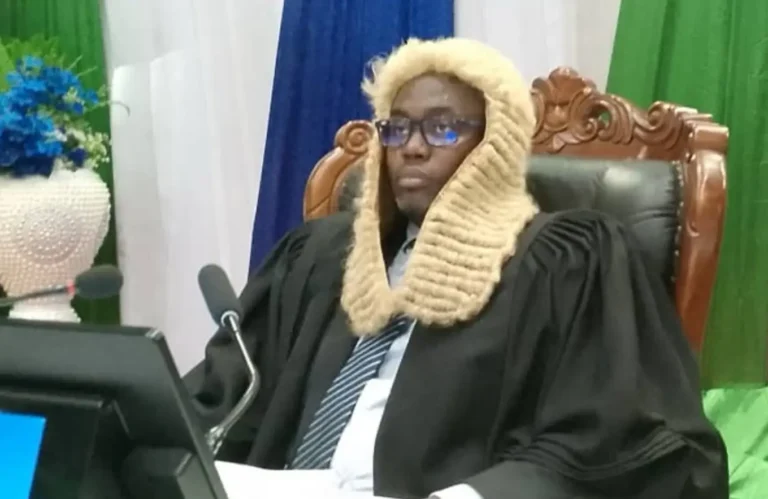
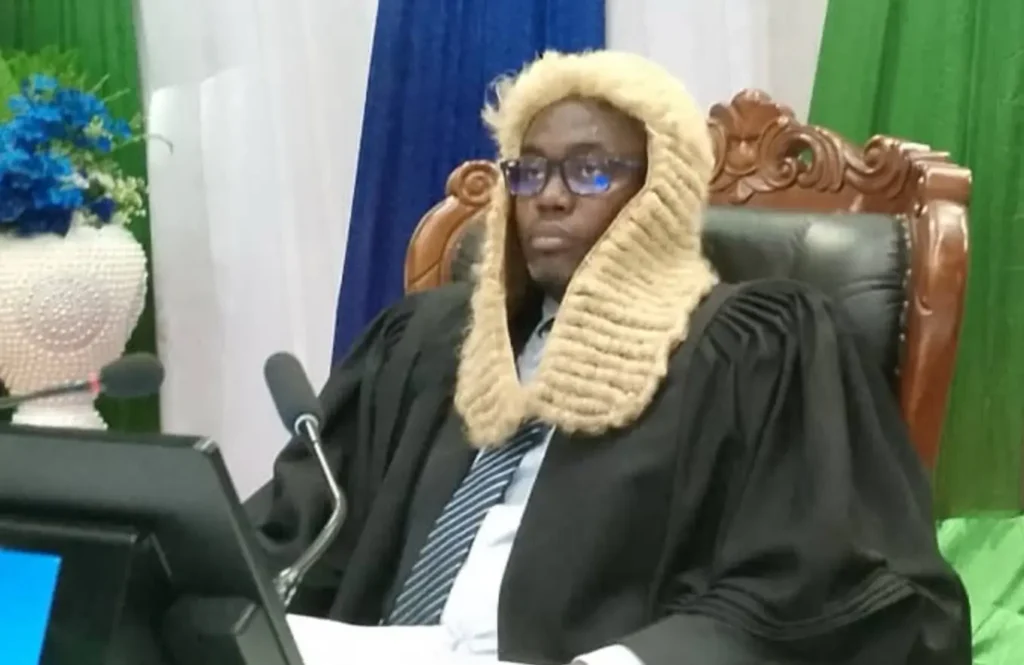
The Speaker, Hon. Sengepoh S. Thomas, holds a different view.
In his ruling, he maintained that the decision before them could not itself alter the existing constitution.
He argued that section 108 speaks to entrenched provisions in the constitution. Because the bill did not propose changes to entrenched clauses, he said, the two-thirds requirement was inapplicable. Instead, the decision would be determined by a simple majority vote, citing section 91 of the constitution.
APC lawmakers rejected the ruling, arguing that the constitutional safeguard cannot simply be avoided by describing the parliamentary action as one step in a wider amendment process.
“Mr. Speaker, I respect your office, but we on this side will not be part of an agreement that does not reflect the will of the majority. Posterity will judge us,” said opposition leader Hon. Abdul Kargbo
Eventually, the APC walked out of the chamber. But that did not stop parliament from proceeding with the bill.
The Electoral Map Could Look Very Different
Beyond the parliamentary drama, the bill itself could significantly reshape Sierra Leone’s electoral landscape.
Among its most politically consequential provisions is the proposed adoption of proportional representation as the only system for conducting parliamentary elections.
It represents a major departure from the traditional constituency-based model and could alter the relationship between votes cast and parliamentary seats won.
The bill also introduces a 50%+1 threshold for winning presidential elections, meaning a candidate would need to secure more than half of the valid votes to win outright.
The APC had strongly rejected proportional representation, stating that key stakeholders in the consultation process, such as the Council of Paramount Chiefs, Inter-Religious Council, and civil society organisations, had expressed support for the first-past-the-post constituency-based system.
Furthermore, the party maintains support for the 55% threshold to win a presidential election, saying it accords broader legitimacy beyond party lines.
“Maintaining the 55% threshold helps ensure that whoever is elected president assumes office with a sufficiently broad national mandate and a responsibility to govern beyond the confines of party, region, or political stronghold,” it said.
Joseph Fitzgerald Kamara Enters the Fight
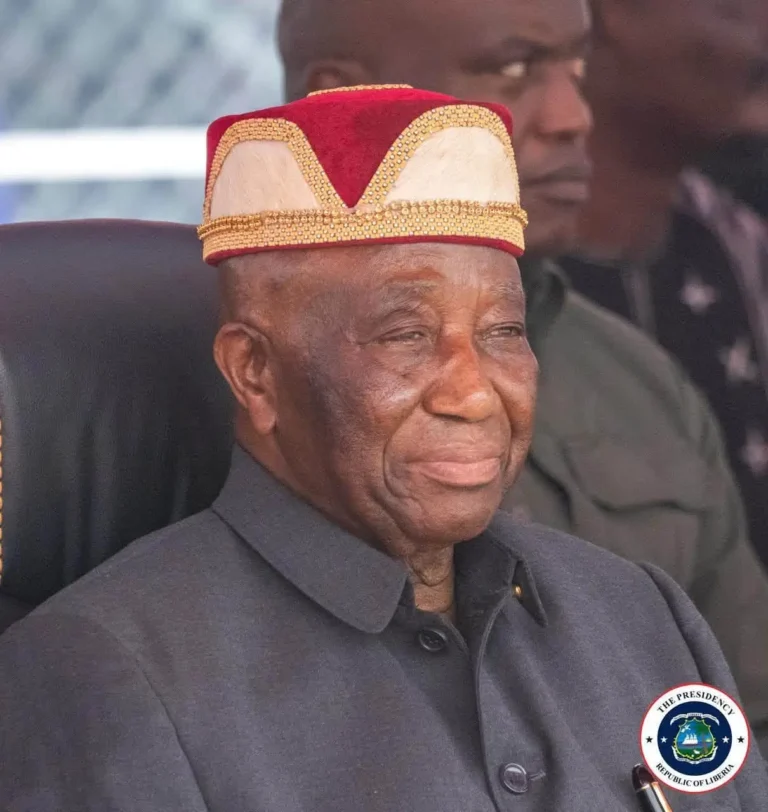
The parliamentary dispute has now drawn a strong argument from former justice minister Joseph Fitzgerald Kamara.
Kamara argues that the two-thirds requirement is a deliberate constitutional safeguard designed to prevent a temporary parliamentary majority from easily changing the country’s supreme law.
For him, the question is not simply whether parliament has a working majority but whether the constitution’s higher threshold has been met.
A simple majority may be enough to decide many questions in parliament, he said, but changing the constitution is different. It requires a higher level of parliamentary consensus.
“Any amendment passing on a lesser calculation is not just procedurally wrong but constitutionally dead,” he said.
That challenge could now become central to the next phase of the dispute.
Lawyers’ Society Throws a Legal Punch
The Lawyers’ Society is among a growing number of judicial watchdogs to raise concerns over the manner in which the constitutional amendment process was conducted.
In a public statement, the organisation said that abandoning the constitutionally prescribed two-thirds majority requirement for constitutional amendments could “set a dangerous precedent” for future attempts to alter the country’s supreme law.
“This cannot be the standard expected in a constitutional democracy,” the Lawyers’ Society said. “If the Constitution is openly disregarded in the very process of amending it, the foundation of amendment itself is called into question.”
The statement adds a new dimension to the controversy, with the debate now extending beyond parliament to legal and constitutional observers who are questioning the implications of the process for Sierra Leone’s democratic institutions and the rule of law.
The Bigger Question: Who Has the Final Word?
The controversy exposes a deeper question about the balance of power between parliament, the speaker and the constitution itself.
At the centre of the dispute are two competing interpretations: the speaker’s ruling and the opposition’s stance.
The speaker’s position is that the two-thirds requirement applies when parliament reaches the constitutionally prescribed stage at which the constitution is actually altered.
The opposition’s argument is that the safeguard must apply to parliamentary actions that form part of the process leading directly to such an alteration.
It may sound like a technical disagreement. It is anything but.
If the opposition’s interpretation prevails, questions could arise about whether the parliamentary process has complied with the constitution.
If the speaker’s interpretation stands, parliament would have greater latitude to determine certain stages of a constitutional amendment process by ordinary majority.
The difference could establish an important precedent for every future attempt to amend Sierra Leone’s constitution.
A Fight With Electoral Consequences
The political stakes could hardly be higher.
The bill is not merely changing parliamentary procedure; it proposes to reshape the rules under which political parties will compete for power.
Proportional representation could change the composition of parliament, and the 50%+1 presidential threshold could change how candidates approach presidential elections.
For the opposition, however, the process has become as important as the substance.
The APC’s walkout signals that the party does not accept the speaker’s interpretation or the circumstances under which parliament proceeded to amend the constitution.
For the governing side, the passage of the bill represents a major legislative achievement and a significant step towards implementing the proposed electoral changes.
But the political victory may not be the end of the story.
From Parliament to the Courts?
The speaker has indicated that the legislation could be subject to interpretation by the supreme court within three months of its passage.
That possibility gives the judiciary a potentially decisive role in resolving the dispute, but it seemingly casts a doubt on the speaker’s judgement.
The court could ultimately be asked to examine the interpretation of Section 108(2)(b), the significance of the votes taken during the amendment process and whether parliament complied with the constitutional safeguards governing amendments.
That means the battle that began on the parliamentary floor may now move into the legal arena. And if it does, the consequences could extend well beyond this particular bill.
More Than a Numbers Game
What happened in parliament is more than which side had the mathematics to decide anything; it is about how Sierra Leone’s constitution can be changed and under what conditions.
The governing majority may have secured passage of the bill, but the APC’s challenge suggests that the controversy will not disappear with the speaker’s gavel.
For a country whose political history has repeatedly demonstrated the importance of constitutional rules, the question now confronting Sierra Leone is bigger than this parliament:
When political majorities seek to rewrite the rules of the political game, how much constitutional protection should stand in their way?
That question may ultimately be answered not in the chamber but in the courts.
And whatever that answer is, it could shape Sierra Leone’s electoral architecture, constitutional practice and political competition for years to come.