By James B. Tucker
The Court of Arbitration for Sport (CAS) has delivered a ruling that could prove far more important to Sierra Leone football than the legal dispute that brought the case before it.
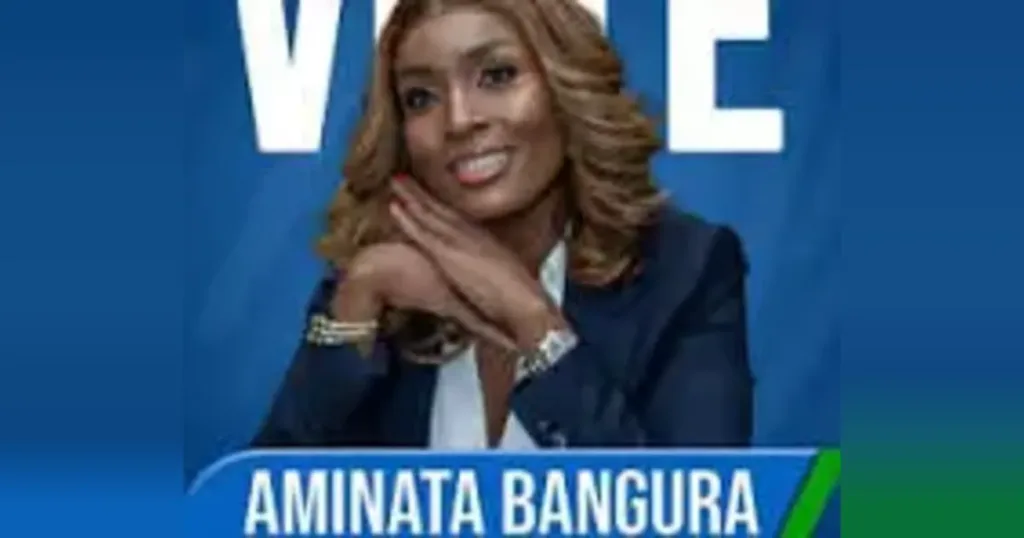
In its Oct. 5 ruling, CAS dismissed in its entirety the appeal brought by former Sierra Leone Football Association (SLFA) presidential aspirant Aminata Bangura and upheld the decision of the SLFA Ethics Board dated 19 July 2025.
Bangura has also been ordered to bear the costs of the arbitration and contribute CHF 3,000 towards the SLFA’s legal costs and expenses.
For Sierra Leone football, the ruling is important in that it provides international judicial backing to an internal ethics process that came under intense pressure during one of the most controversial electoral periods in the SLFA’s recent history.
More importantly, it sends a message that integrity requirements for people seeking the highest offices in football administration cannot simply be treated as political obstacles or procedural inconveniences.
The controversy began in the build-up to the SLFA’s 2025 elective congress, when candidates seeking elective positions were subjected to integrity checks, including the submission of police clearance. Bangura, who was seeking to contest for the presidency, became the subject of questions surrounding the authenticity and circumstances under which her police clearance had been obtained.
According to the Ethics Board’s findings, Bangura told the committee during her hearing that she had personally gone through the police clearance process and undergone fingerprint screening.
The committee subsequently received information from the police which contradicted that account, with the board finding that the clearance had been obtained through a proxy rather than through the personal process Bangura had described. The committee consequently treated the matter as an integrity violation and barred her from the presidential contest.
But Bangura’s lawyers strongly disputed the finding, arguing that the police clearance had been officially issued and signed by the head of the Criminal Investigations Department and that any administrative irregularity should be attributed to the issuing authorities rather than to their client. They also argued that there was no evidence that Bangura had personally forged or altered the document.
Following the ethics board disqualification of Bangura, she challenged the ruling and took the matter to CAS. On 31 July 2025, CAS granted her temporary relief that enabled her to participate in the SLFA presidential election scheduled for 2 August. That interim decision became a major development in the already turbulent electoral process and allowed Bangura to appear on the ballot. She subsequently finished second in the election, receiving 11 votes, while Babadi Kamara won with 43 votes, with one abstention among the 55 delegates who voted. But the temporary clearance did not end the substantive dispute.
More than a year later, CAS has now dismissed Bangura’s appeal in full and upheld the ethics board’s July 2025 decision.
The 2025 interim intervention allowed Bangura to participate in the election while the dispute was being considered. The 5 October 2026 award addresses the challenge itself and leaves the SLFA Ethics Board’s decision intact.
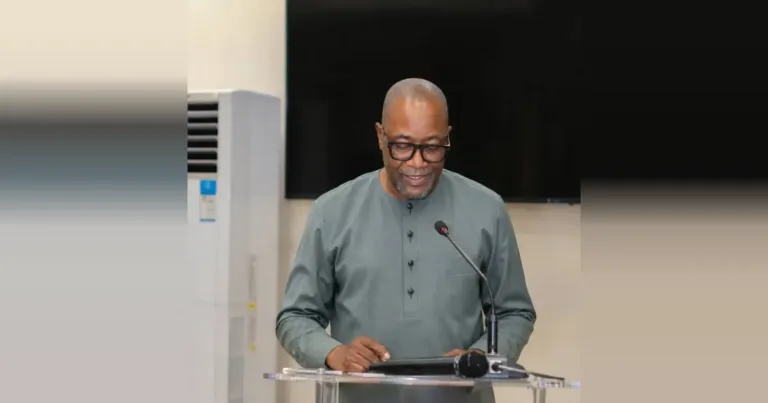
The latest development deserves particular recognition for the chairman of the SLFA Ethics Board, Abu-Bakarr Sheriff Esq. Lawyer Sheriff and his committee were operating in an extremely difficult environment. The board was dealing with allegations involving prominent figures at the very top of Sierra Leone football. Its decisions affected the sitting SLFA president at the time, Thomas Daddy Brima, as well as Bangura, one of the leading presidential challengers.
The committee therefore had little chance of avoiding controversy. It could either enforce the integrity standards expected of candidates or retreat because the individuals involved were powerful and politically consequential. It rather chose the former, and that decision now looks considerably stronger in light of the CAS outcome.
The point is not that an ethics board should be praised simply because it disqualifies candidates. Quite the opposite. An ethics body earns credibility when it is prepared to apply the same standards to everyone, investigate allegations, hear the affected parties and then accept scrutiny of its decisions through the established appeals process. That is what makes this episode a very important one.
Sheriff’s committee did not have the final word. It did, however, have the courage to make a difficult decision and defend it through the proper institutional channels. CAS has now provided the final international sporting legal validation of that decision.
An attempt to treat the CAS ruling as simply another chapter in the political contest between Aminata Bangura and the SLFA would miss the bigger picture. Football administration is built on trust. Players must trust administrators. Clubs must trust competitions. Sponsors must trust financial and regulatory systems. Supporters must believe that people occupying leadership positions are subject to rules rather than personalities. And candidates seeking control of a national football association must be prepared to undergo greater scrutiny, not less.
The SLFA’s own nomination requirements included a valid police clearance certificate, identification documents, a sworn affidavit affirming eligibility and good character, and other supporting documentation.
Though such requirements may sometimes appear bureaucratic, they are safeguards for protecting the institution.
The SLFA says the award affirms the decisions of its judicial bodies and underscores the importance of integrity, transparency and compliance in football governance.
For Abu-Bakarr Sheriff and the members of the SLFA Ethics Board, the CAS ruling should therefore be regarded as an important moment. Their responsibility was never to make everyone happy. Rather, it was to protect the integrity of the institution they were appointed to serve.
In a highly charged electoral environment that requires independence, discipline and the willingness to make unpopular decisions, the latest CAS award provides strong external validation for that approach.
It goes further to show that the strongest football institutions are not those without disputes. They are those with credible systems capable of resolving disputes fairly, independently and according to the rules. And, on this occasion, Sierra Leone football has demonstrated that such a system can work.