By Lawrence Williams
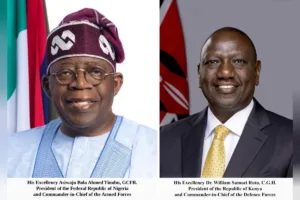
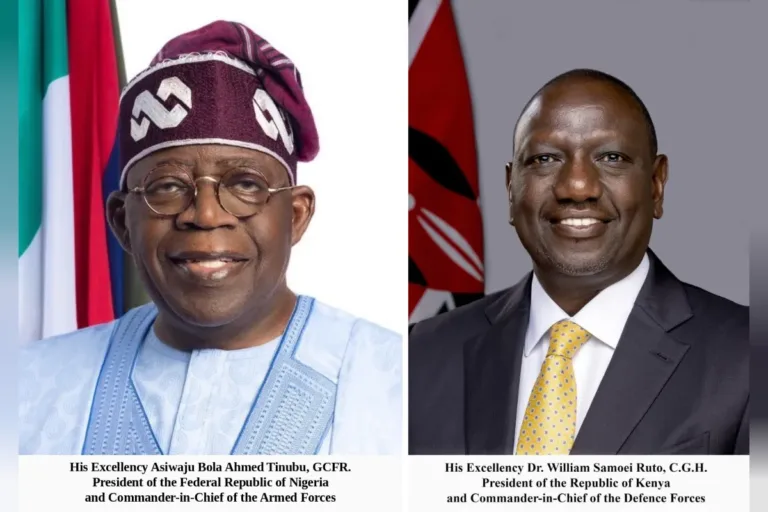
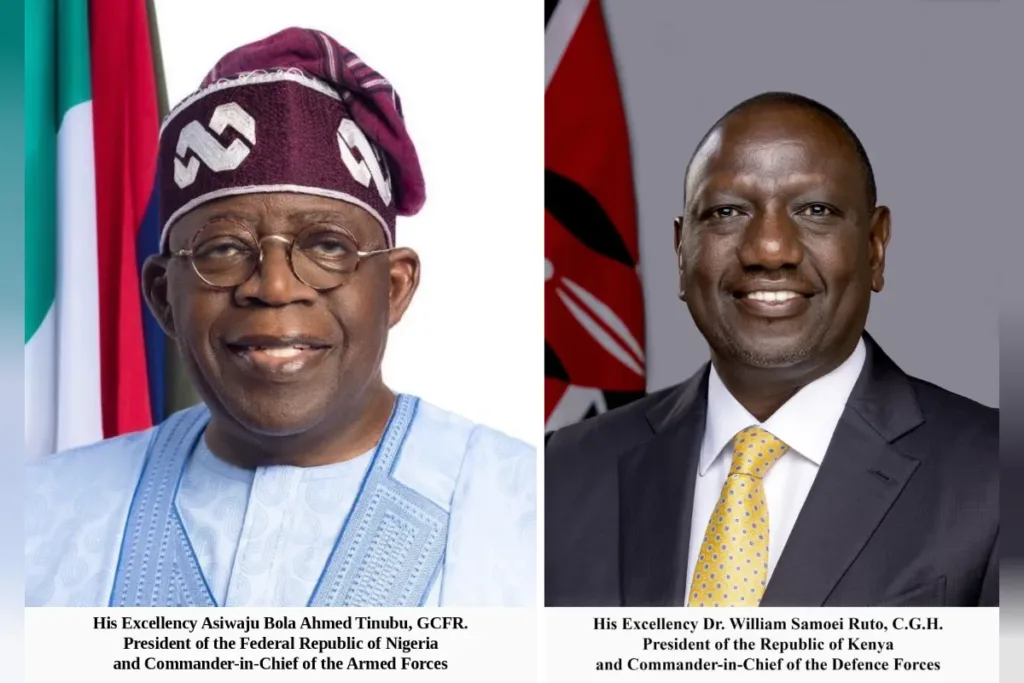
Two of Africa’s major economic and political powerhouses, Nigeria and Kenya, are heading towards pivotal elections next year, with Bola Ahmed Tinubu and William Ruto facing a crucial re-election test amid growing public concerns over economic hardship, insecurity, governance and protection of democratic freedoms. Nigeria’s presidential and National Assembly elections are scheduled for 16 January 2027, while Kenya’s general election is set for 10 August 2027.
Bola Ahmed Tinubu has launched his campaign for a second term in Nigeria, while William Ruto’s re-election campaign in Kenya is taking shape amid youth-led dissatisfaction and divisions within the opposition.
These elections will offer voters an opportunity to judge whether policies pursued by the two administrations have translated into meaningful improvements to their daily lives. The conduct of credible elections and protection of civil liberties provide a separate test for democratic accountability.
Nigeria: economic reforms meet household hardship
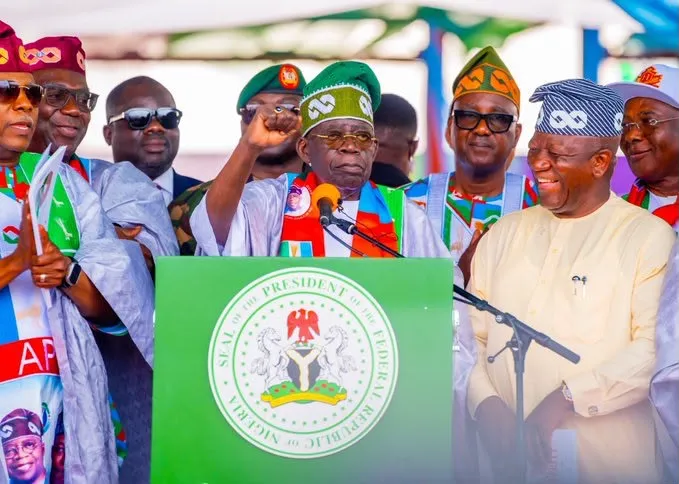
Tinubu’s campaign centres on reforms introduced since he took office in 2023, including the removal of fuel subsidies and changes to the foreign exchange market. Reuters reporting credits these measures with improving public finances and investor sentiment, while also contributing to severe cost-of-living pressures.
In a statement published by the presidency on 30 October 2026, Tinubu argued that his administration’s reforms had strengthened macroeconomic stability and quadrupled federation revenue since 2021. He presented infrastructure investment—including roads, ports, rail and power—as part of a strategy to build a $1 trillion economy by 2030.
The IMF’s June 2026 assessment provides a more qualified picture. It stated reforms had improved macroeconomic outcomes and strengthened resilience, but warned that poverty conditions remained difficult for many Nigerians.
The same release reported that poverty had reached 63% under the national poverty line and estimated that 27 million Nigerians faced food insecurity in autumn 2025. It also identified domestic insecurity and surges in global food and fuel prices as risks to livelihoods and economic activity.
Insecurity also remains a major challenge, particularly in northern Nigeria, where armed groups, banditry, kidnappings and insurgency continue to threaten communities.
The removal of fuel subsidy and subsequent adjustment to the exchange rates are said to have exacerbated the financial pressures experienced by households and businesses, even though the government argues that they were necessary to stabilise the economy.
The opposition challenge
Former vice president Atiku Abubakar and former Anambra State governor Peter Obi, who finished second and third respectively in the 2023 presidential election, remain prominent figures in the opposition challenge.
Speaking at the African Democratic Congress convention in April 2026, Obi raised concerns about poverty, insecurity, rising debt and what he described as worsening economic and national divisions. He said collective efforts were needed to address the country’s growing problems.
Atiku Abubakar has also criticised the Tinubu administration over its economic policies, while presenting himself as a better alternative to the incumbent.
The opposition’s attempt to consolidate their political strength reportedly suffered a setback in May as Obi and Rabiu Kwankwaso left the ADC-led alliance and joined the Nigeria Democratic Congress, citing internal disputes and legal wrangles.
A further complication arose on 5 November, when a court voided Atiku’s ADC presidential nomination alongside the processes that produced the party’s disputed leadership. The ADC rejected the ruling as politically motivated, indicating its intention to challenge it.
These divisions could benefit Tinubu, especially if rival opposition candidates fail to agree on a common political strategy. But they do not, by themselves, determine the election outcome.
Democratic space and human rights
Amnesty International’s Nigeria 2025 country report documented arrests and detention of journalists and individuals critical of the authorities, excessive force against peaceful protesters, and restrictions on dissent. It also reported that elected authorities were suspended during the six-month emergency declared in Rivers State on 18 March 2025.
The 2024 #EndBadGovernance protests remain another important reference point. The rights group reported killings, arrests and excessive force during the demonstrations, while noting police denials of responsibility for the killings.
These findings make accountability for security agencies and protection of peaceful political activity an important criteria for assessing the democratic environment, not merely secondary issues alongside economic reform.
For Tinubu, the 2027 election will therefore be more than a referendum on economic reforms. It will also test public confidence in his administration’s handling of insecurity, human rights and democratic accountability.
Kenya: Ruto faces youth-led discontent
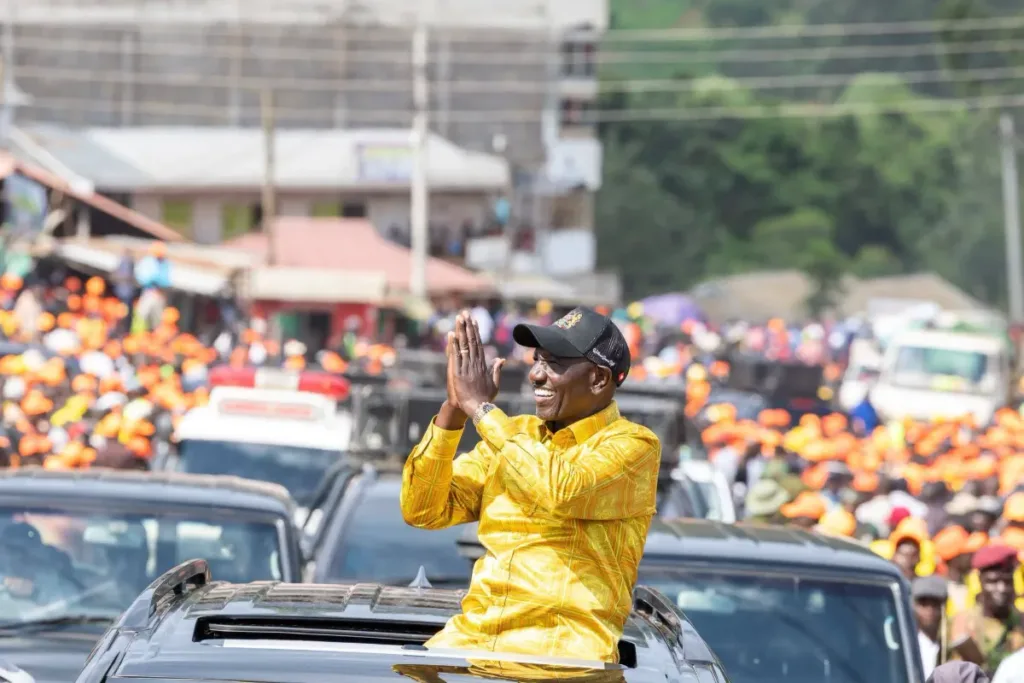
Kenya is one of East Africa’s largest economies. Ruto was sworn in on 13 September 2022. The 2010 constitution limits a president to two terms, allowing him to seek a second term.
His administration’s Bottom-Up Economic Transformation Agenda prioritises agriculture, small businesses, housing, healthcare and the digital economy. Official Treasury statements also identify subsidised agricultural inputs and the Hustler Fund among government interventions.
The Kenya National Bureau of Statistics’ 2026 Economic Survey reports that real GDP grew by 4.6% in 2025, compared with 4.7% in 2024. Agriculture expanded by 3.1%, while construction recovered from contraction to growth of 6.8%.
However, the government’s development agenda has faced significant public resistance, particularly over taxation, the cost of living and the affordability of essential services. The youth-led protests against the 2024 Finance Bill brought proposed taxation and the government’s response to dissent into sharp focus. The country’s human rights watchdog, KNCHR, documented deaths, injuries, disappearances and arrests, condemned excessive force, and also condemned destruction of property by some protesters.
The protests also exposed widespread dissatisfaction with unemployment, economic inequality, corruption and what many young people considered unfulfilled political promises.
Opposition leaders are increasingly positioning themselves around the demand for accountability and a change of government in 2027.
Opposition mobilisation and civil liberties
The emerging political opposition includes former deputy president Rigathi Gachagua, Wiper Party leader Kalonzo Musyoka, former justice minister Martha Karua and other political figures seeking to challenge Ruto.
Their criticism centres on the cost of living, taxation, public debt, corruption allegations, unemployment and the government’s handling of protests.
Human rights concerns add another dimension. Amnesty International’s Human Rights Under Siege report examines the response to economically driven protests between 2023 and 2025, documenting repression through arbitrary arrests and detention, unlawful surveillance and restrictions on civic space.
However, the opposition is not yet a unified political force. Rival political ambitions and disagreements over who should lead a possible coalition remain obstacles to presenting a consolidated challenge to Ruto.
A September 2026 Institute for Security Studies analysis of “Wantam” (one term) and “Tutam” (two terms) argues that opposition divisions could improve Ruto’s prospects despite public dissatisfaction.
In June 2026, the Independent Electoral and Boundaries Commission (IEBC) launched its Strategic Plan 2024–2029 and Election Operations Plan 2025–2027, setting out priorities for electoral governance, participation, institutional resilience and public confidence, including the use of technology to strengthen electoral credibility.
The relevant question is not simply whether Ruto can recover political support, but whether the election allows citizens to express dissatisfaction through peaceful, credible competition.
A test of democratic accountability
The 2027 elections in Nigeria and Kenya will be important beyond the individual political fortunes of Tinubu and Ruto.
Both countries are influential regional powers whose political stability, economic performance and democratic standards have implications for the wider African continent.
In Nigeria, voters will assess whether Tinubu’s economic reforms have delivered sufficient improvements in living standards and whether the government has made meaningful progress in addressing insecurity.
In Kenya, the election will test whether Ruto can overcome youth-led discontent, opposition mobilisation and concerns about human rights and accountability.
Economic performance and democratic accountability are distinct measures. A credible election must allow citizens to judge both.