Co-authored By: H.E. Fatima Maada Bio, President of OAFLAD and First Lady of Sierra Leone; H.E. Ambassador Amman Twum-Amoah, African Union Commissioner for Health, Humanitarian Affairs and Social Development; Dr. Mohamed Yakub Janabi, WHO Regional Director for Africa.
Vaccines have quietly transformed the course of human history. Across Africa, they have protected generations of children, safeguarded families, and strengthened communities. This year’s Africa Vaccination Week, aligned with the global theme “For every generation, vaccines work,” is a powerful reminder that immunization is not only one of the greatest public health achievements of our time—it is a cornerstone of Africa’s future.
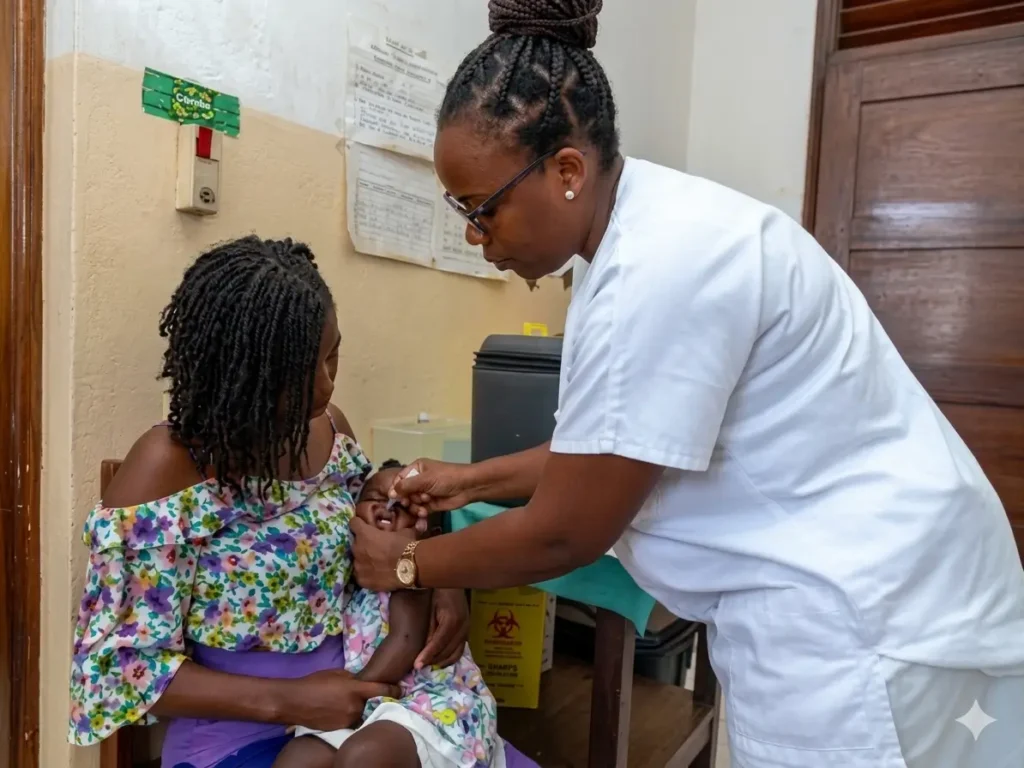
Over the past five decades, that impact has been profound: saving millions of lives, reducing childhood illness, and strengthening primary health care systems across the continent. Today, vaccines protect people across the life course—from infancy to older age—preventing diseases such as cervical cancer and offering new hope against malaria.
Yet, despite this progress, the promise of vaccines has not reached everyone. In 2024, 6.7 million children in Africa were “zero-dose,” meaning they did not receive even a single dose of the DTP vaccine—an increase of 91,000 compared to 2023. This is not a failure of science, which has consistently proven vaccines to be safe and effective, but a reflection of persistent gaps in access, equity, financing, and trust that must be urgently addressed.
Across the continent, countries supported by WHO and partners have made important strides in expanding routine immunization and introducing new vaccines. In just one year, last-dose HPV vaccination coverage among girls increased from 32% in 2023 to 44% in 2024. Similarly, coverage of the second dose of the measles vaccine rose from 48% to 55%.
These gains are central to broader efforts to eradicate polio, eliminate measles, and control other vaccine-preventable diseases. Over the past two years, nearly 9 million children who had missed essential routine vaccinations since 2019 were reached through the “Big Catch-Up” initiative. These achievements demonstrate what is possible when science, political will, and coordinated partnerships come together to deliver results at scale.
But progress is uneven, and the job is far from done. While Africa is vaccinating more children than ever before, coverage gains remain modest-outpaced by the continent’s rapidly growing population. To ensure vaccines truly work for every generation, immunization must be strengthened as a core pillar of primary health care. This means reaching zero-dose children and underserved communities, investing in health workers and supply chains, and leveraging digital technologies for better data and decision-making. It also means integrating immunization across the life course so that protection is continuous and inclusive.
At the heart of immunization lies more than science—there is trust. Communities must have confidence in the in the rigorous efficacy and safety of vaccines and in the systems that deliver them. Across Africa, First Ladies, through the Organization of African First Ladies for Development (OAFLAD), have played a pivotal role in mobilizing communities, advocating for immunization, and ensuring that no child is left behind. As mothers of nations, OAFLAD members stand at the forefront of protecting the health and future of Africa’s children, using their platforms to build trust, champion vaccines, and drive community-level change. When women, especially mothers and caregivers are informed, empowered, and supported, immunization outcomes improve significantly.
Still, challenges persist. Misinformation, social and gender barriers, and inequitable access continue to undermine progress. Addressing these requires sustained investment in community engagement, risk communication, and inclusive health systems that meet people where they are. Strengthening demand for vaccines is as critical as ensuring their availability.
At the continental level, ensuring that vaccines work for every generation requires strong African leadership and ownership. Through collective commitments and continental frameworks such as the Addis Ababa Declaration on Immunization, the African Union and its Member States are advancing domestic health financing, strengthening local manufacturing of vaccines and health products, and enhancing regulatory systems through institutions such as the African Medicines Agency. These efforts are essential to reducing dependency, improving resilience, and securing equitable access to life-saving interventions.
Immunization is not only a public health priority; it is a strategic investment in human capital, economic growth, and long-term development. Healthy populations are the foundation of productive societies, and vaccines are among the smartest investments countries can make to secure that future.
This Africa Vaccination Week is therefore not only a moment of reflection, but a call to action. Governments must continue to prioritize immunization in national budgets and policies. Communities and leaders must champion vaccines and build trust. Partners must align with country-led priorities and support sustainable transitions. The private sector has a critical role to play in investing in Africa’s health future, while young people can serve as powerful advocates for change.
The message is clear: vaccines work for every generation. But for this promise to be realized, systems must work, partnerships must work, and leadership must deliver.
From protecting children today to safeguarding the health of future generations, immunization remains one of our most powerful tools for building a healthier, stronger, and more resilient Africa. Now is the time to move from commitment to action—ensuring that every person, everywhere, benefits from the life-saving power of vaccines.
Because when Africa is fully protected, Africa is healthier, stronger, and more resilient.