By Lawrence Williams
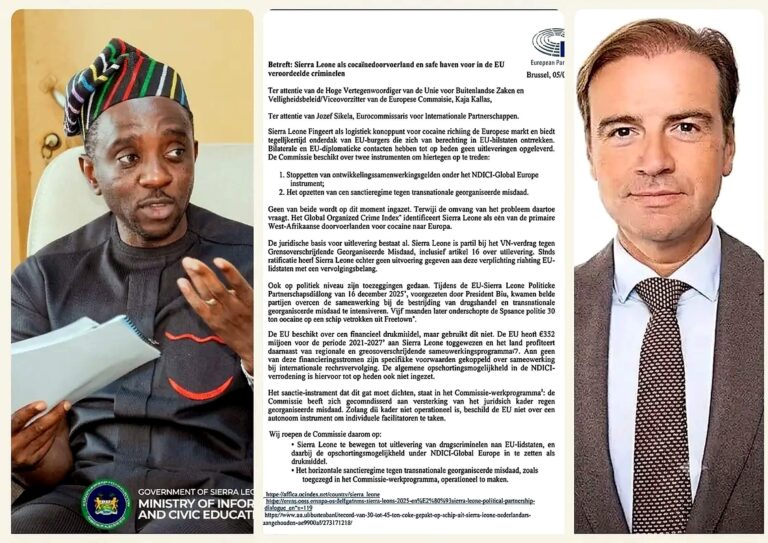
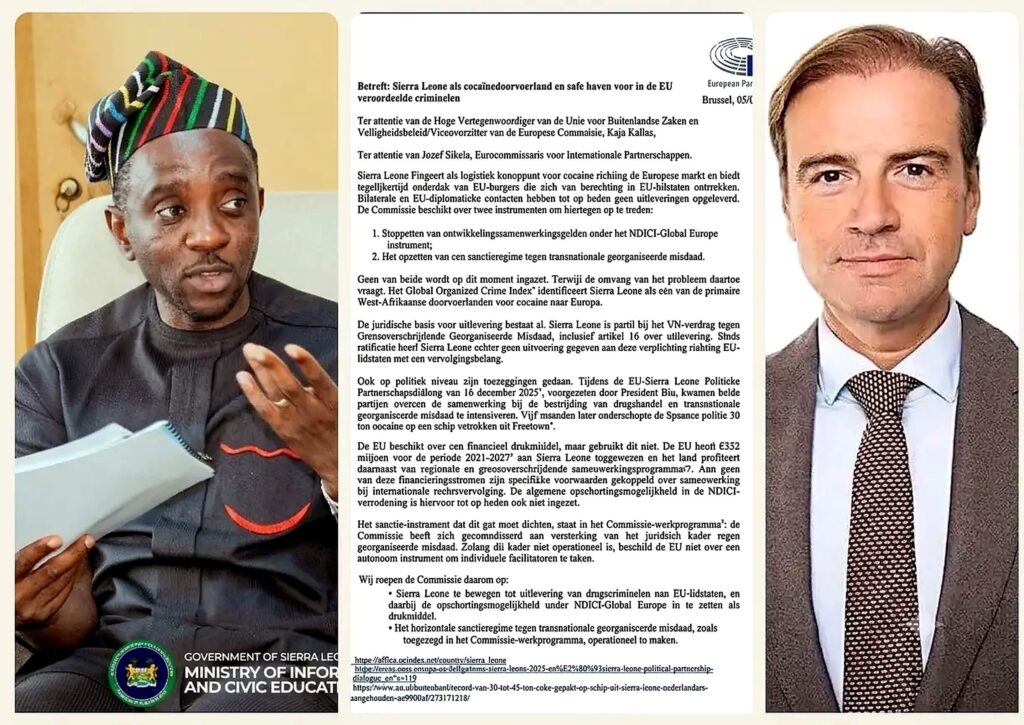
Claim: Sierra Leone’s Minister of Information and Civic Education, Chernoh Bah, claimed during an appearance on 98.1 FM’s Gud Morning Salone programme on Tuesday that the letter attributed to Dutch MEP Malik Azmani dated 5 June 2026, which calls for potential European Union sanctions against Sierra Leone in connection with the Jos Leijdekkers case, was “absolutely fake.”
Verdict: Available evidence shows that the letter was publicly shared and promoted by Malik Azmani through his verified social media accounts and discussed in a televised interview with Dutch broadcaster RTL Nieuws. No evidence was found to support the claim that the document is fake. The minister’s claim is therefore untrue.
Context
The controversy stems from growing diplomatic tensions between Sierra Leone and the Netherlands over fugitive Jos Leijdekkers, also known as “Bolle Jos.”
Leijdekkers has been convicted in absentia in the Netherlands and Belgium for large-scale drug trafficking offences and is among Europol’s most wanted fugitives. Dutch authorities have sought his extradition after reports and images appeared to place him in Sierra Leone, including at public events attended by the president and senior government officials.
The Dutch government has recently intensified efforts to secure cooperation from Sierra Leone regarding Leijdekkers’ whereabouts and possible extradition.
Claim
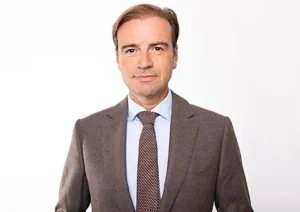
During the radio programme on Tuesday, Minister Bah dismissed as fake a document attributedto Malik Azmani, leader of the Dutch VVD delegation in the European Parliament, and addressed to senior European Union officials.
The correspondence, dated 5 June 2026, is titled: “Sierra Leone as a cocaine transit country and safe haven for criminals convicted in the EU.”
The letter urges the European Union to consider measures against Sierra Leone, including the possible suspension of development assistance and the creation of sanctions mechanisms targeting transnational organised crime.
What Fritong Post Found
Fritong Post reviewed publicly available evidence relating to the disputed correspondence.
The investigation found that MEP Malik Azmani publicly shared the letter through his verified social media accounts and referenced it during a televised interview with RTL Nieuws, one of the Netherlands’ leading news organisations.
In the interview, Azmani discusses the contents of the letter and his concerns regarding Sierra Leone’s alleged role as a transit point for cocaine trafficking and a destination for individuals sought by European law enforcement authorities.
The letter was also published through Azmani’s official communication channels, including his social media platforms.
These public actions are deemed consistent with an elected official authenticating and promoting a document authored by his office.
What the Letter Says
In the correspondence addressed to EU High Representative for Foreign Affairs and Security Policy Kaja Kallas and European Commissioner for International Partnerships Jozef Síkela, Azmani argues that Sierra Leone is serving as both a transit hub for cocaine destined for European markets and a safe haven for individuals convicted or wanted in European Union member states.
The letter calls on the European Commission to:
- Use available diplomatic and financial leverage to encourage Sierra Leone to cooperate on extradition matters;
- Consider the suspension of development assistance under the NDICI–Global Europe programme; and
- Accelerate the establishment of a European sanctions framework targeting transnational organised crime.
The correspondence references a €352 million allocated to Sierra Leone under the EU’s NDICI–Global Europe programme for the 2021–2027 period.
Evidence Supporting Authenticity
Fritong Post found multiple pieces of evidence indicating that the document is authentic:
- Malik Azmani publicly shared the letter through his verified social media accounts.
- The letter was referenced and discussed in a televised interview with RTL Nieuws on the same day it was reportedly sent.
- No statement has been issued by Azmani, his office, the European Parliament, or the European Commission denying the authenticity of the document.
- The content, format, recipients, and publication method are consistent with official parliamentary correspondence.
Conclusion
Based on the available evidence, Fritong Post found no basis for the claim that the 5 June 2026 letter is “absolutely fake.”
On the contrary, publicly available records show that Malik Azmani has openly acknowledged and promoted the correspondence through his official channels and discussed its contents in a media interview.
While reasonable debate may exist regarding the claims, recommendations, or policy proposals contained in the letter, the evidence reviewed by Fritong Post indicates that the document itself is authentic.
Verdict: False. The claim that the letter is “absolutely fake” is not supported by available evidence.
Sources Reviewed
- Official X (formerly Twitter) account of Malik Azmani
- Official LinkedIn account of Malik Azmani
- Official Instagram account of Malik Azmani
- RTL Nieuws interview featuring Malik Azmani discussing the correspondence
- Publicly circulated copy of the 5 June 2026 letter addressed to Kaja Kallas and Jozef Síkela