By James B. Tucker
Huge frustration is beginning to build among football fans after Leone Stars suffered two defeats in their opening Africa Cup of Nations (AFCON) 2027 qualifying matches, leaving the country with no points and a mountain to climb before the campaign has even properly begun.
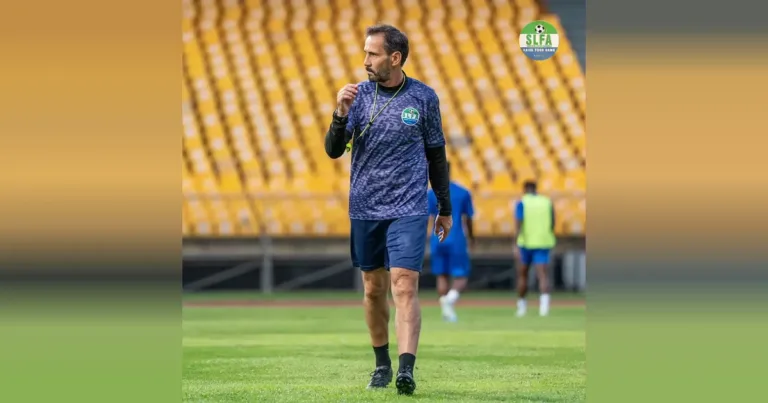
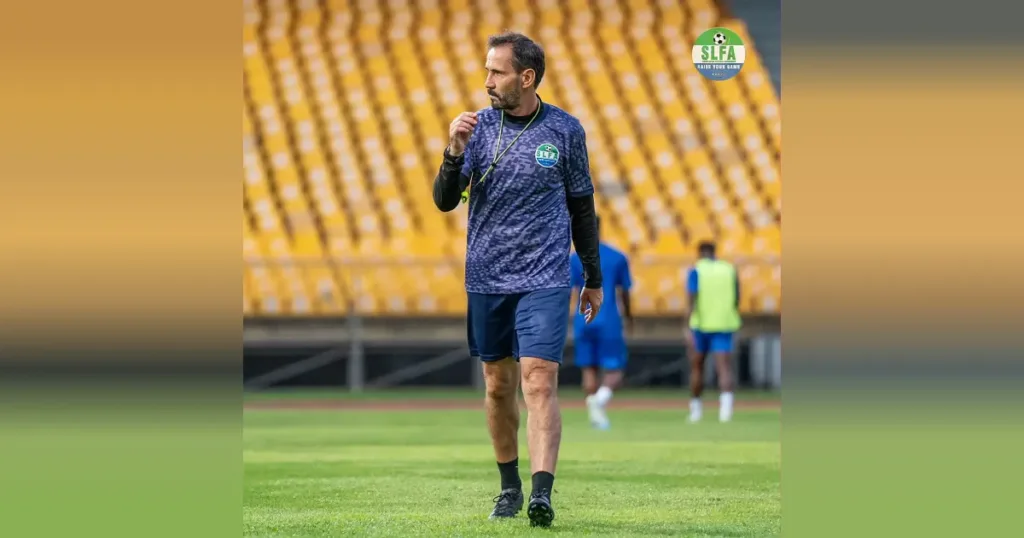
For a nation desperate to see its beloved Leone Stars return to Africa’s biggest football tournament, the start under Didier Gomes Da Rosa could hardly have been more disappointing.
The French coach arrived in June with a clear mandate to qualify Sierra Leone for the 2027 AfCON finals in Kenya, Tanzania and Uganda. The Sierra Leone Football Association expected him to build a competitive team capable of delivering results on the continental stage.
But after the first two qualifying matches, the numbers are unforgiving. And the manner of the first defeat has made the disappointment even harder to swallow.
Sierra Leone opened Group E against Zimbabwe on September 24 with what looked like an ideal start. Alie Conteh gave Leone Stars the lead after just seven minutes before Sallieu Tarawallie doubled the advantage in the 27th minute. At 2-0, Sierra Leone appeared to have the match under control.
Then everything changed. Zimbabwe’s Marshall Munetsi pulled one back in the 72nd minute. Four minutes later, Tawanda Chirewa levelled the game.
With Sierra Leone struggling to regain control, Munetsi struck again in the 88th minute to complete Zimbabwe’s extraordinary comeback and hand the Warriors a 3-2 victory.
CAF described it as one of the most dramatic comebacks of the opening qualifying round.
For Sierra Leone, it was a devastating collapse. The issue was not simply losing a football match. It was the manner in which a team that had established a commanding two-goal advantage allowed the opposition to completely reverse the game in the final 20 minutes.
That raises questions about concentration, game management, defensive organisation and, inevitably, the technical leadership.
If the Zimbabwe defeat could be explained as a painful collapse, the second match offered very little comfort.
Four days later, Leone Stars travelled to face Equatorial Guinea and lost 1-0. There was no two-goal advantage to protect this time. No dramatic comeback. Just another defeat.
The result left Sierra Leone at the bottom of Group E after two rounds with zero points, while DR Congo took six points from its opening two matches. Zimbabwe and Equatorial Guinea each have three points. That makes the road ahead considerably more difficult.
CAF’s qualification format gives teams only six group matches, meaning every dropped point can become costly. In Group E, Sierra Leone, Zimbabwe, Equatorial Guinea and DR Congo are competing for the two qualification places.
Analysts say Sierra Leone has therefore already used up half of its margin for error before reaching the halfway point of the campaign.
Though it may sound premature to conclude that Da Rosa is incapable of leading Leone Stars to AfCON qualification because he has only overseen the opening phase of his tenure, and international football gives coaches very little time to build a team, but that argument cannot shield the coach from legitimate scrutiny either.
He was appointed precisely because the football authorities believed his experience could help Sierra Leone compete at a higher level.
Da Rosa, they say, is an experienced African football coach. Before arriving in Sierra Leone, he had worked with clubs and national teams across the continent and had previously helped Botswana qualify for the AfCON finals.
That pedigree raises expectations. Sierra Leone did not appoint him merely to oversee another rebuilding exercise. The stated ambition was to get Leone Stars back to the AfCON. And now the opening two competitive matches have produced the worst possible return.
Results matter, but performances and patterns matter too.
Against Zimbabwe, Sierra Leone showed that the team can create opportunities and take control of a match. Scoring twice inside the opening 27 minutes demonstrated attacking quality and a capacity to punish an opponent.
But the second half exposed a different side of the team. Zimbabwe increased the pressure, and Sierra Leone could not stop the momentum. Once Munetsi scored in the 72nd minute, the game changed dramatically. The equaliser came only four minutes later. The winner arrived 12 minutes after that.
A team chasing qualification for a major continental tournament must learn how to manage moments like that.
When leading 2-0, should Leone Stars have slowed the game down? Should the midfield have been reinforced? Should the defensive line have been protected differently? Should substitutions have been made earlier? Were the players physically or mentally prepared for Zimbabwe’s response? These are questions for the technical team.
You may agree with me that Sierra Leone is not short of footballing talent. The current generation includes players with experience in professional football abroad, alongside promising home-based players who have demonstrated their ability to compete.
The 25-man squad selected for the opening AfCON qualifiers included players such as Juma Bah, Osman Kakay, Tyrese Fornah, Sullay Kaikai and Alie Conteh, among others.
That makes the early results even more frustrating for supporters because the problem is not necessarily a lack of individual talent. The bigger question is whether that talent is being assembled into a team with enough tactical discipline, resilience and collective identity.
International football is unforgiving. A team can have talented individuals and still fail if it cannot manage matches as a unit. Zimbabwe’s comeback was a painful demonstration of that reality.
The good news for Sierra Leone is that the qualification campaign is not over. The bad news is that the next assignment is against DR Congo, the only team in Group E to win both opening matches. The two sides are scheduled to meet in November, first in DR Congo on November 11 and then in Sierra Leone on November 15. Those matches could define Leone Stars’ campaign.
If Sierra Leone can take points from DR Congo, the qualification race could suddenly look different. If the team loses both matches, the dream of reaching AfCON 2027 would be in serious danger. The November double-header will therefore be about more than three points. It will test whether Da Rosa can make the necessary tactical and psychological adjustments.
For Da Rosa, the challenge is now clear. He needs to explain why a team that looked so comfortable against Zimbabwe lost control so quickly. He needs to find a way to make Leone Stars more difficult to break down without sacrificing their attacking threat. He needs to get the midfield functioning as a unit. And, perhaps most importantly, he needs to restore confidence.
Footballers who concede three goals after leading 2-0 do not simply need tactical instructions. They need the mentality to close out difficult matches. That is part of the coach’s job.
There is still a long way to go in the AfCON qualification campaign. But we cannot pretend the opening two defeats are insignificant. The country has missed too many opportunities in recent qualification campaigns, and supporters are tired of watching promising teams fall short when the pressure increases.
The clock is already ticking. Two matches into the 2027 AfCON qualifying campaign, Sierra Leone sit bottom of Group E without a point. For a country that believes qualification should be an ambition rather than a distant dream, that is not just a poor start; it’s a warning.