By Ellen Samura
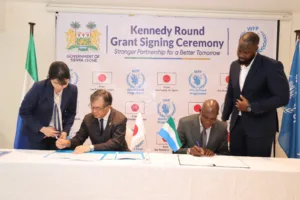
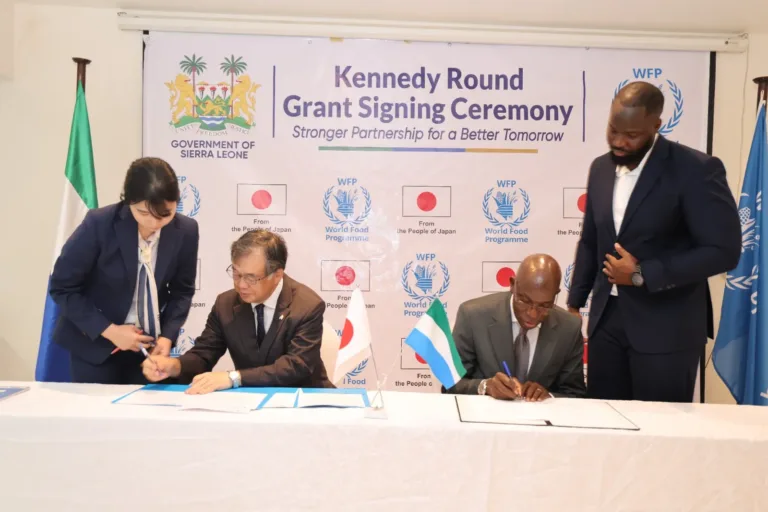
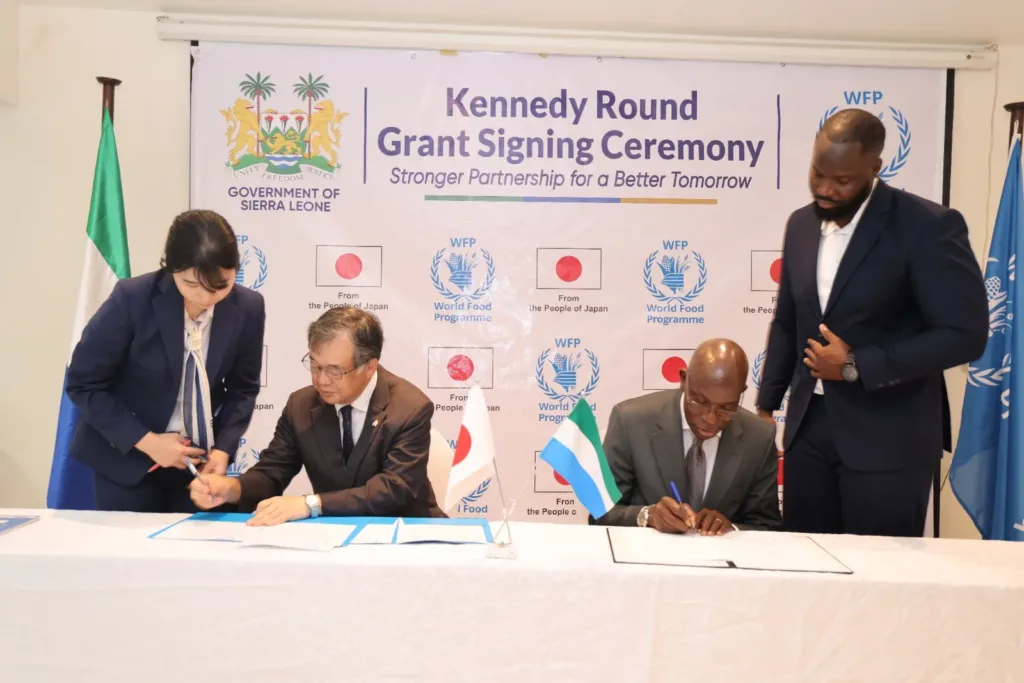
Japan and the United Nations World Food Programme (WFP) have signed a JPY 200M (US$1.25M) food aid grant to provide nutritious school meals in Sierra Leone and boost child nutrition for nearly 30,000 children in Pujehun district.
The 2026 Kennedy Round (KR) Food Aid Grant will support school meals in 135 government-assisted pre-primary and primary schools across six chiefdoms in the district for two years.
The funding will cover the procurement and delivery of food commodities for nutritious school meals and strengthen the capacity of school-level stakeholders. It will also support the purchase of locally produced rice from smallholder farmers through the Home-Grown School Feeding approach.
The intervention is expected to reduce short-term hunger among school children while supporting their wellbeing, school attendance and ability to learn.
Japan’s earlier support to provide school meals in Sierra Leone
The latest grant builds on earlier Kennedy Round contributions to school feeding in Sierra Leone. In 2024, a JPY 200 million (about US$1.36 million) grant supported 28,800 primary school children in Pujehun for the 2024-2025 school year. In September 2025, a further JPY 200 million grant was signed to support over 27,000 primary and pre-primary pupils in the district over two years. Over the past decade, Japan has contributed US$37 million to WFP in Sierra Leone, making it the largest donor to the country’s school feeding portfolio, according to the UN in Sierra Leone.
Japan: investing in children’s future
H.E. Ambassador Hiroshi Yoshimoto, Japan’s ambassador to Sierra Leone, said the initiative reflects Japan’s commitment to investing in the wellbeing and future of Sierra Leonean children. He said it will do this by strengthening the National School Feeding Programme and improving its sustainability and reach.
“Through previous Kennedy Round grants, Japan has helped WFP provide school meals to thousands of children in schools across Pujehun and Kambia districts. This latest agreement targets nearly 30,000 children in Pujehun District over two years,” he said.
Government: sustaining school feeding
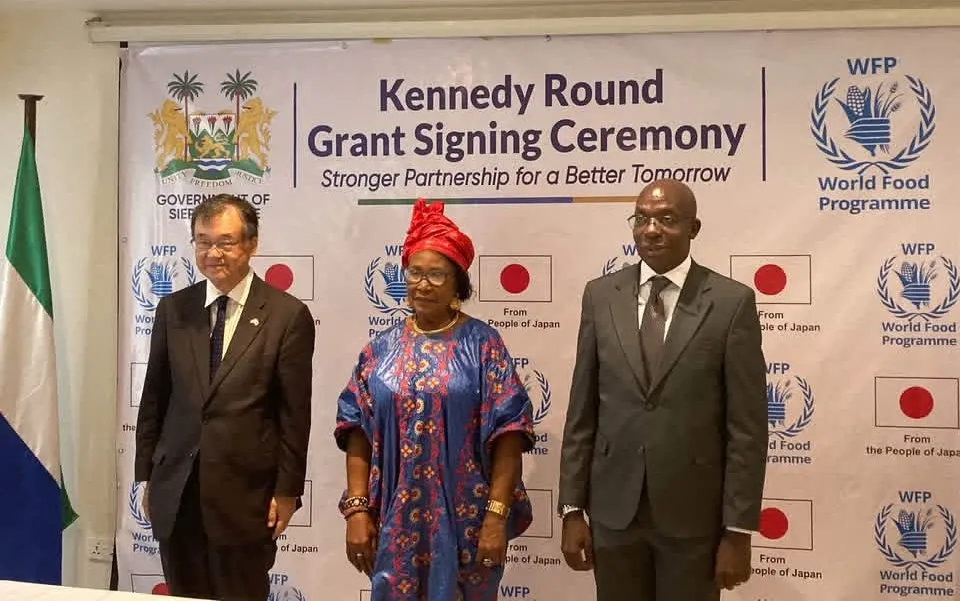
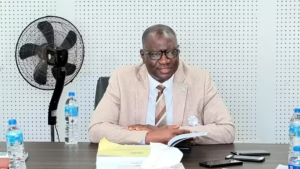
Deputy Minister I of Basic and Senior Secondary Education Emily Kadiatu Gogra welcomed the donation, saying it’s aligned with the government’s education priorities.
“The grant strengthens our ability to maintain school feeding while we continue developing the national capacity and financing arrangements necessary for its long-term sustainability,” she said.
Backing local farmers through Home-Grown School Feeding
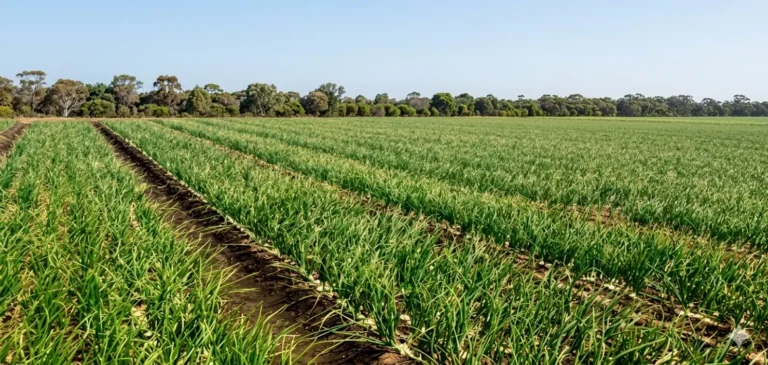
Beyond providing meals, the initiative will strengthen links between school feeding and domestic food production. Under the Home-Grown School Feeding approach, WFP will buy rice from smallholder farmers, creating a reliable market for local produce and supporting rural livelihoods.
WFP Representative and Country Director in Sierra Leone, Andrew Odero said the contribution will help WFP address children’s nutrition needs while expanding opportunities for local farmers.
“For more than six years, the Government and people of Japan have stood alongside WFP and the Government of Sierra Leone to support school feeding, particularly in Kambia and Pujehun districts,” he said. “Through successive Kennedy Round food aid grants, Japan has provided school meals for thousands of schoolchildren. Japan has also helped WFP invest in the agriculture sector, enabling smallholder farmers to sell to the school feeding programme.”
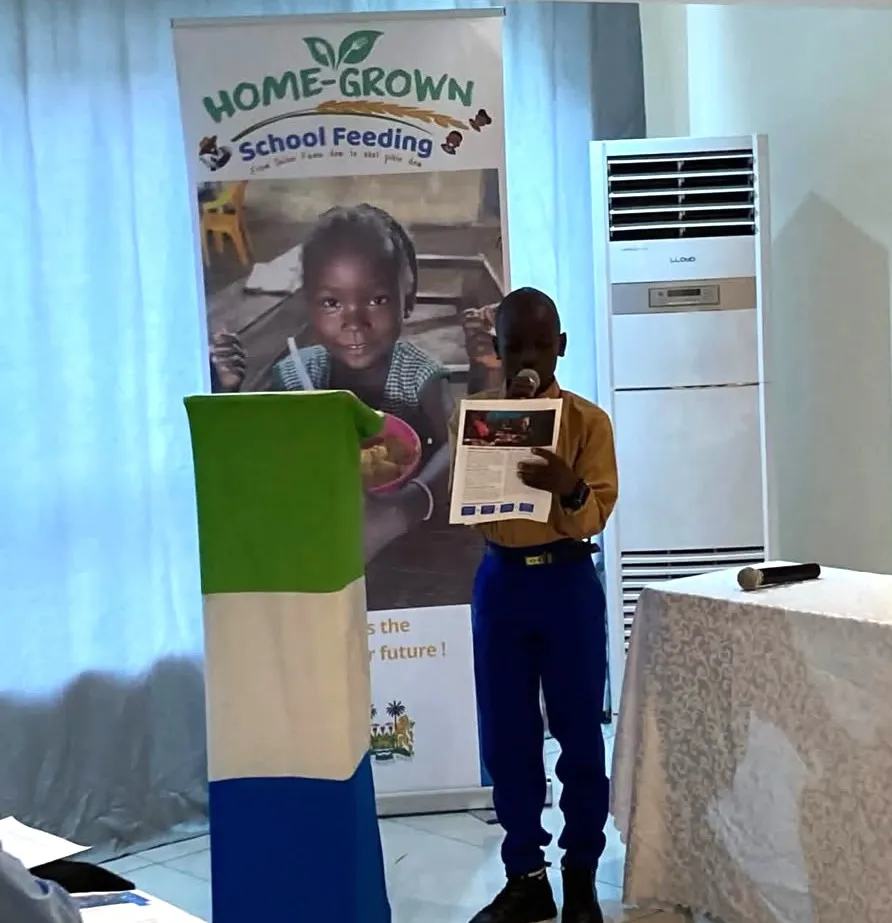
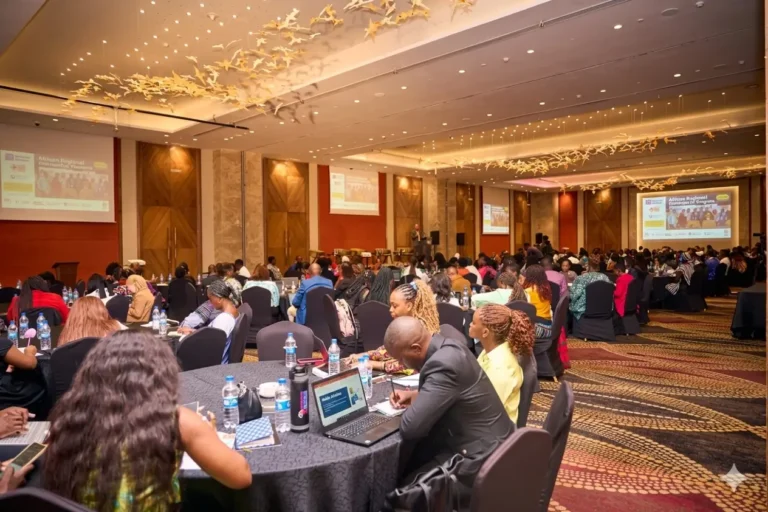
The signing ceremony at the New Brookfields Hotel in Freetown brought together representatives of Japan and Sierra Leone governments, WFP, JICA and the National School Feeding Secretariat.
The new contribution reaffirms the partnership between Japan, WFP and Sierra Leone in supporting the National School Feeding Programme while strengthening opportunities for local farmers.
For the nearly 30,000 children expected to benefit, this support for school meals in Sierra Leone means a nutritious meal at school and a greater opportunity to stay healthy, remain in the classroom and learn.