By Dr Philip Conteh
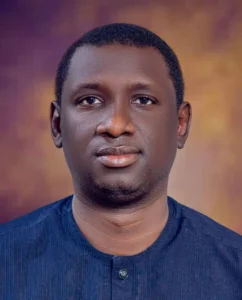
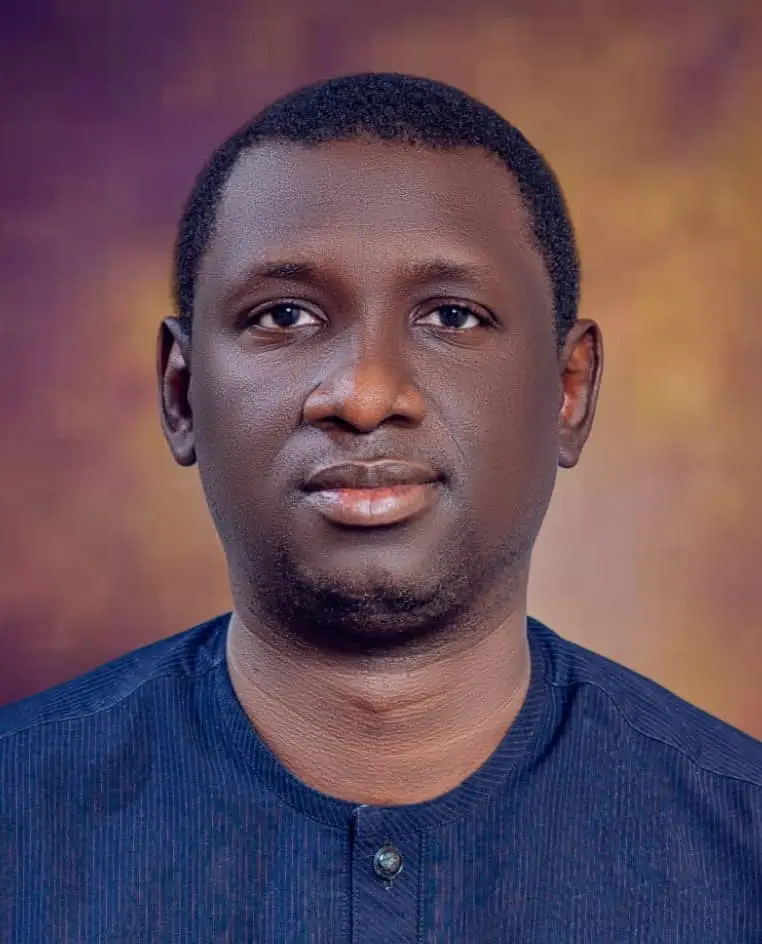
Sierra Leone has never lacked political slogans. What it often lacks is the difficult work of turning political promises into a credible national project. That is why the emergence of Dr Ibrahim Bangura, popularly known as DIB, deserves serious attention.
At the centre of his political message is a simple proposition that Sierra Leone cannot build a prosperous future while remaining trapped in the divisions, mistrust and institutional weaknesses that have defined too much of its past.
His answer is captured in three words: HEAL. UNITE. BUILD.
For DIB, these are not merely campaign words. They represent a political philosophy built around national healing, social cohesion and economic transformation.
And as the All People’s Congress prepares to determine its political direction, the question before delegates is bigger than choosing an individual. It is about deciding what kind of politics the party wants to offer Sierra Leone and what kind of leadership it believes can deliver that politics.
A Politics Beyond Division
Sierra Leone’s political history has been marked by intense competition. Elections have sometimes deepened divisions rather than simply providing a peaceful mechanism for choosing leaders.
DIB’s message attempts to confront that reality directly. Heal. Unite. Build begins with the recognition that development is difficult in a society where citizens distrust one another and where political differences can become social divisions.
Healing, in this context, is not about forgetting the past. It is about acknowledging the wounds created by years of political, social and economic exclusion and creating the conditions for citizens to move forward together.
Unity does not mean that Sierra Leoneans must agree on everything. It means accepting that political disagreement should never destroy the idea of a shared national destiny.
Building means moving beyond political rhetoric towards institutions, infrastructure, jobs, businesses, education, healthcare and opportunities that ordinary citizens can experience in their daily lives.
That is where DIB’s “Love Over Hate” and “Bridges, Not Walls” messages acquire political significance. They offer a different vocabulary for political competition, one that seeks to persuade rather than demonise, connect rather than divide, and build rather than destroy.
Why DIB’s Message Is Resonating
The attraction of DIB’s message is not difficult to understand. Across Sierra Leone, people are concerned about the same fundamental questions: How will my children get a good education? Where will young people find meaningful employment? How can families access affordable healthcare? How can businesses grow? How can farmers earn more from their work? How can citizens have greater confidence in public institutions?
These concerns do not belong to one political party. They are national concerns.
For that reason, a political programme that speaks about healing, unity and building has the potential to reach beyond traditional political constituencies.
A parent can see the promise of a better future for their children. A young graduate can see the possibility of an economy that creates opportunities rather than forcing talent to look elsewhere. An entrepreneur can see the importance of a stable environment in which businesses can grow. A farmer can see the need for development that reaches beyond Freetown. And a public servant can see the importance of institutions that work.
That is when political vision becomes meaningful — when people can connect it to their own lives.
Sierra Leone Is Rich in Potential
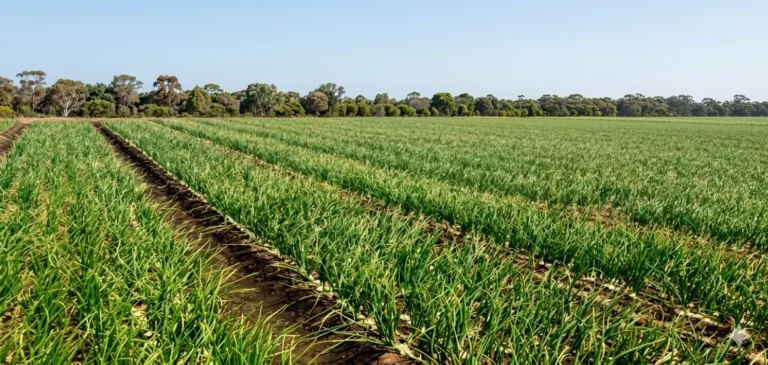
One of the most striking elements of DIB’s political message is his insistence that Sierra Leone’s greatest problem is not a lack of potential. The country possesses extraordinary natural resources, a youthful population, fertile land, a strategic coastline and a people with enormous resilience.
Yet natural wealth has not automatically translated into broad-based prosperity.
The challenge, therefore, is not simply discovering what Sierra Leone has. It is building the institutions, economic systems and leadership culture capable of converting those resources into opportunities for citizens.
DIB’s argument is that Sierra Leoneans should not accept poverty and underdevelopment as permanent features of national life.
There is an important distinction here. Acknowledging poverty is not the same as accepting it. A country can recognise the difficulties it faces while still demanding better from its leaders. That demand for better is at the heart of the DIB proposition.
From Politics to Nation-Building
Perhaps the most important question surrounding DIB is whether his message can move from an attractive political narrative to an effective programme of government.
That is ultimately the test of every political leader.
Vision matters. But vision must be accompanied by institutions, competent people, resources, discipline and measurable results.
For DIB, BUILD therefore needs to mean more than constructing roads and buildings. It should mean building institutions that citizens can trust. Building an economy capable of creating decent employment. Building a productive agricultural sector. Building an education system that prepares young people for the modern economy. Building a healthcare system that protects families. Building an environment in which women and young people can participate fully in economic and political life. And building a political culture in which national interest can sometimes rise above party interest.
That is the larger challenge facing anyone who seeks to lead Sierra Leone.
Why the APC Decision Matters
For APC delegates, the forthcoming choice is particularly consequential.
The flagbearer of a major political party does not simply inherit a party structure. He or she inherits the responsibility of presenting an alternative national vision to voters.
DIB is asking delegates to believe that the APC can offer Sierra Leone something different — a politics centred on healing rather than perpetual conflict, unity rather than exclusion, and development rather than political survival.
That proposition deserves to be debated seriously.
Delegates should examine the candidate’s record, ideas, leadership capacity, organisational strength and ability to translate his vision into practical policies.
But they should also consider something less tangible: the kind of political culture they want the APC to represent.
Political parties do not only choose candidates; they choose narratives, values, and the language with which they intend to speak to the country.
And DIB is offering the APC a language of reconciliation, national belonging and development.
Love Over Hate
In an increasingly polarised political environment, Love Over Hate is perhaps DIB’s most ambitious proposition.
It is easy to dismiss political language about love and unity as idealistic. But national development requires trust. Investors need confidence. Citizens need confidence in institutions. Communities need confidence in one another. Young people need confidence that their country has a future. And political opponents need to believe that disagreement will not automatically make them enemies.
In that sense, love in public life does not have to mean sentimentality. It can mean choosing dialogue over hostility. It can mean disagreement without dehumanisation. It can mean competition without destruction. And it can mean putting Sierra Leone’s national interest above the temptation to turn every political disagreement into a permanent battle.
That is the deeper meaning behind DIB’s call for Bridges, Not Walls.
The Candidate and the Moment
There is reason political moments sometimes become larger than individual candidates. They occur when a significant number of citizens begin asking whether the old political formulas are still capable of solving the country’s problems.
Sierra Leone is at such a moment. The country needs leadership capable of understanding its divisions without being imprisoned by them. It needs leaders who can speak to young people without simply using youth as a campaign demographic. It needs leaders who understand that women are not merely beneficiaries of development but central participants in it. It needs economic leadership capable of converting Sierra Leone’s resources and human capital into productive opportunity. Above all, it needs a political culture in which winning an election is not considered the ultimate achievement.
The ultimate achievement should be what happens after the election.
That is where HEAL. UNITE. BUILD proposition faces its most important test.
The Choice Before Delegates
Delegates therefore have a responsibility that goes beyond personal preference or political loyalty. They must ask themselves what kind of leader the APC needs at this point in Sierra Leone’s history.
Do they want the kind of politics that continues to define itself primarily through opposition and division or prefer a candidate who believes the party can present a broader national project? Do they want leadership that speaks to existing political constituencies or one capable of expanding the political conversation to include citizens who are tired of confrontation and want practical solutions?
DIB is presenting himself as the candidate of that new conversation. His proposition is ambitious: heal the country’s divisions, unite its people and build the institutions and economy required to create a more prosperous future.
Whether he can deliver on that promise is a question that ultimately belongs to the voters. But whether the vision deserves serious consideration should not be in doubt.
Own the Vision, Build the Future
The strongest political movements are not built around one person’s ambition. They are built around ideas that people believe are larger than the individual. That is the opportunity before DIB.
If HEAL.UNITE.BUILD is to become more than a campaign slogan, it must become a programme that citizens can understand, scrutinise and ultimately measure.
If Love Over Hate is to become more than a campaign phrase, it must be reflected in how supporters treat political opponents.
If Bridges, Not Walls is to become a governing philosophy, it must influence how institutions, communities and political actors relate to one another.
And if BUILD is to become the defining promise, Sierra Leoneans must eventually see the evidence in jobs, businesses, schools, hospitals, infrastructure, stronger institutions and improved living standards.
That is the standard DIB should invite the country to hold him to because Sierra Leone does not need another political promise that ends with an election; rather it needs a national project that begins with one.
HEAL. UNITE. BUILD.
For DIB, the message is clear: Sierra Leone’s future cannot be built by one person, one party or one generation. It must be built together.
And that is the political proposition he is placing before the APC — and, ultimately, before Sierra Leone.