By Lawrence Williams
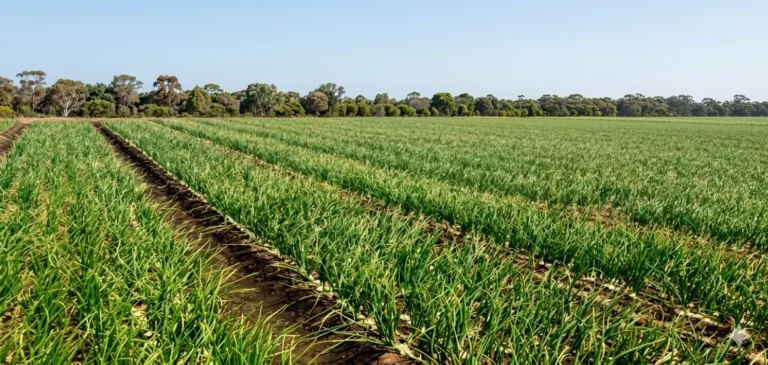
A 5% import duty on rice was reintroduced in 2024 to generate domestic revenue for agricultural development. The government said the proceeds would be channelled through the Agricultural Development Fund (ADF), a financing mechanism established under the Feed Salone initiative to support agricultural programmes using locally generated revenue.
The public was assured that the funds would be used solely for their intended purpose.
However, two years later, the 50/50 Group and Budget Advocacy Network (BAN) conducted a study and found that although NLe365.2 million was generated from the rice import duty during the 2024 and 2025 fiscal years, only NLe31.9 million (representing just 9% of the total revenue) was transferred to the ADF.
These findings raise a critical question: where did the rest of the money go?
The government had presented the measure as more than a revenue mobilisation strategy. It said the proceeds would be ring-fenced to finance agricultural development through the ADF, supporting initiatives to increase domestic rice production, strengthen food security and reduce the country’s dependence on imported rice.
In their report, Making Tax Work for Women: Assessing the Gendered Impact of Sierra Leone’s 5% Rice Import Duty, they noted that “the gap between revenue collection and transfer is a key issue that undermines the policy’s effectiveness.”
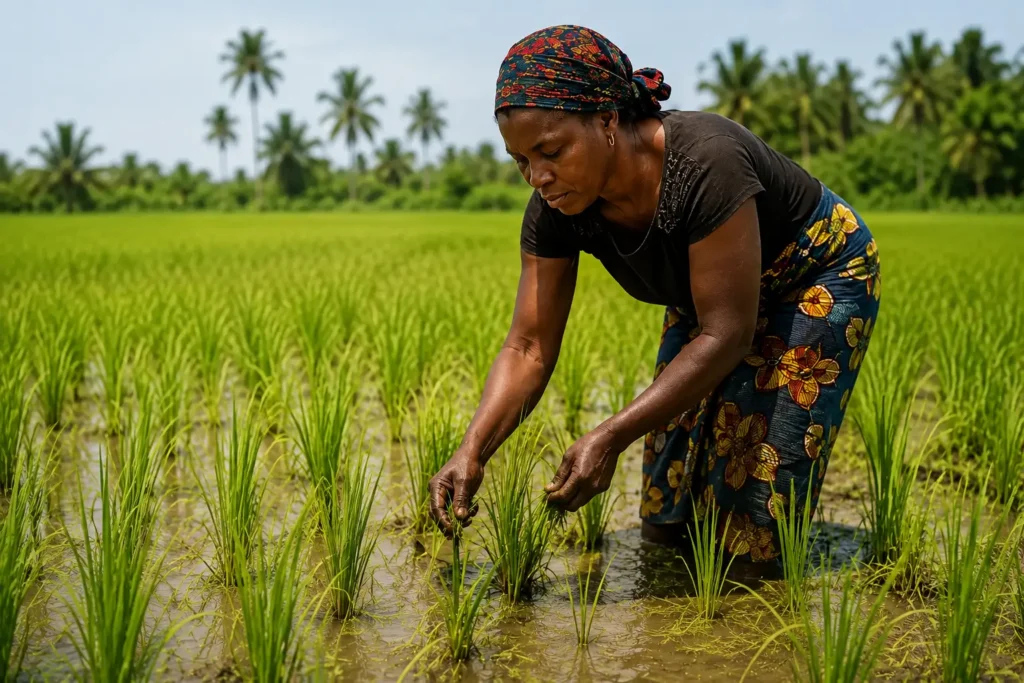
For many Sierra Leoneans, securing just one square meal a day remains a daily struggle. This burden falls particularly heavily on women, who make up the largest share of the country’s agricultural workforce.
Despite playing a leading role in food production, processing and marketing, women farmers continue to face significant barriers, including limited access to farmland, affordable credit, irrigation facilities, mechanisation services and quality agricultural inputs.
According to the report, inadequate funding has slowed programmes designed to address these challenges, representing a missed opportunity to advance gender equality in agriculture.
Using principles of gender-responsive budgeting, the report estimates that if the full NLe365.2 million collected from the rice import duty had been transferred to the ADF, and 30% allocated to programmes targeting women farmers, approximately NLe109.6 million could have been invested in initiatives to improve women’s agricultural productivity.
Such funding, the report says, could have expanded women’s access to improved seeds, fertiliser, irrigation equipment, agricultural machinery, extension services and affordable financing for women-led farming enterprises.
“The limited transfer of the tax duty to the ADF, coupled with the absence of targeted support, has meant that women farmers have seen little improvement in access to inputs, financing, or extensions services, among other potential benefits, given deeper structural inequalities,” it said.
While the report does not allege any wrongdoing, it raises concerns about accountability and transparency in the management of ring-fenced revenues.
Responding to questions from Fritong Post, a senior official at the Ministry of Finance said the government often faces competing priorities and unforeseen expenditure needs that may require the use of special funds, even where revenues have been ring-fenced.
When asked whether the remaining NLe333.3 million (about 91% of the total revenue collected) remains available, the official declined to give a direct answer, referring the question instead to the Bank of Sierra Leone (BSL), which he said is the appropriate institution to respond.
The official also suggested that ensuring the proper transfer of ring-fenced revenues would require what he described as a “Standing Order” authorising the BSL to automatically transfer the designated amount from the Treasury Single Account to the Agricultural Development Fund.
The 50/50 Group and BAN are now calling for public disclosure of how much revenue is collected from the rice import duty, how much is transferred to the ADF, and how the funds are ultimately spent.
They are also urging stronger parliamentary oversight and regular public reporting to ensure that taxes introduced for specific development objectives are used as intended.
The report argues that taxation should do more than generate government revenue; it should also deliver measurable development outcomes.
“The central issue is not whether the tax generates revenue, but whether the fiscal system effectively converts that revenue into equitable development outcomes,” the report said.
It concludes that when revenues collected for agriculture are not transferred in line with stated policy commitments, public confidence may be eroded and opportunities to strengthen food security lost.