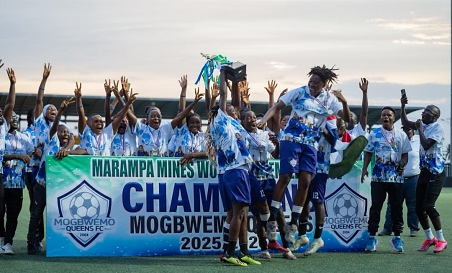
Mogbwemo Queens have been crowned champions of the Marampa Mines Women’s Premier League after a dominant, unbeaten campaign that has now secured them a place on the continental stage.
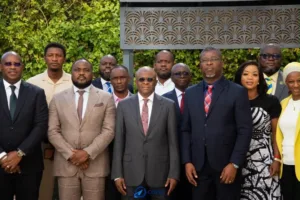
The Sierra Leone Football Association (SLFA) President, Babadi Kamara, led a high-level delegation to officially present the trophy at the Southern Arena on May 10.
Mogbwemo Queens sealed the title in emphatic fashion, thrashing Ascentonians FC 6-0 in their final match to complete a flawless season with a 100 percent winning record. The victory marked their third league title and underscored their growing dominance in women’s football in Sierra Leone.
Speaking after the coronation, SLFA President Babadi Kamara praised the team’s remarkable achievement, describing their unbeaten run as a reflection of discipline, quality, and the progress being made in the women’s game.
“This is a symbol of the new era of excellence we are building in Sierra Leone football,” he said, reaffirming the association’s commitment to strengthening and promoting women’s football nationwide.
Following their crowning as champions, the team took to social media celebrating their unbeaten run, saying they maintained a 100 percent record, winning all 22 games to earn 66 points, while scoring 72 goals and conceding just six.
As national champions, Mogbwemo Queens will now represent Sierra Leone in the 2026–27 CAF Women’s Champions League, starting from the preliminary rounds.
Their qualification marks a significant milestone for the club and for women’s football in the country, as they prepare to carry the nation’s hopes onto the African stage.