By Lawrence Williams
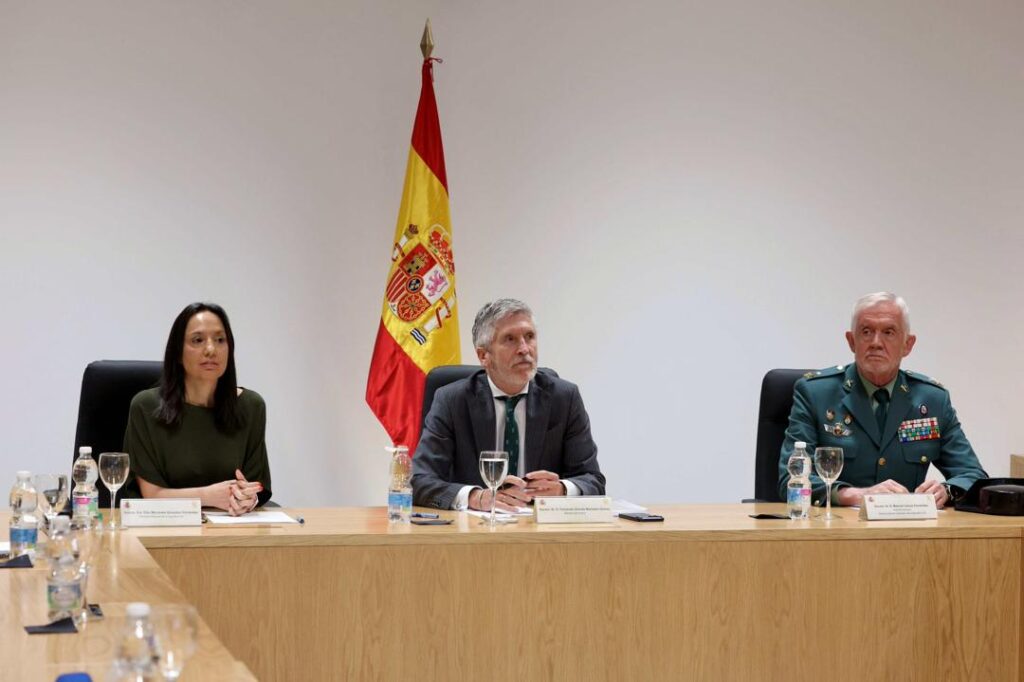
Spain’s Interior Minister Fernando Grande-Marlaska has confirmed that the 30,215 kilograms of cocaine seized aboard the Arconian vessel on May 1 marks the largest single cocaine haul in European history.
Speaking at a news conference in Madrid on Friday, Grande-Marlaska said the shipment, with an estimated street value of €812.2 million, has been linked to the Dutch-Moroccan “Mocro Maffia” syndicate, an organized crime network reportedly associated with the Dutch cocaine fugitive Jos Leijdekkers, who has been residing in Sierra Leone since 2022.
According to MarineTraffic, a global maritime platform that provides real-time ship tracking and data on maritime companies and seafarers, the Arconian vessle is registered to Serenity Shipping SL Ltd, with an official address at 20 Off Main Road, Portor Drive, Juba Hill, Freetown, Sierra Leone.
However, when Fritong Post visited the address to verify, we found no trace of the company. All signage had vanished. Days later, MarineTraffic removed or restricted public access to the ownership details of the vessel. The sudden disappearance suggests the lengths to which drug traffickers will go to conceal their identities and evade international law enforcement.
Findings indicate that Leijdekkers entered Sierra Leone with a Turkish passport bearing the name Omar Sherif. He lost no time to establish connections within influential government circles, including the First Family, and was reportedly married to the president’s daughter.
Further findings by the Global Initiative Against Transnational Organised Crime have highlighted a significant shift in global cocaine trafficking routes, with West African coastlines increasingly serving as key transit and storage hubs for narcotics bound for Europe. The organization further observed that Leijdekkers could have leveraged local connections to rebuild his trafficking network and evade international law enforcement.
“His apparent impunity in the country, despite widespread media and international law enforcement focus, may act as an advert for other kingpins fleeing justice elsewhere,” GI-TOC stated.
The Arconian vessel last docked at the Freetown port on the night of April 8, where it remained for almost 15 days before departing for Benghazi, Libya on April 22. It was later intercepted by the Spanish Civil Guard south of the Canary Islands.
However, Sierra Leone’s Office of National Security (ONS) said it has not received any official communication from its Spanish counterparts regarding the incident, but that it is investigating the facts surrounding the matter.
Meanwhile, Spanish officials have rejected the claim that the vessel was headed to Libya. Dr. Mohammed Al-Fitori, spokesman for the Anti-Drug and Psychotropic Substances Agency, told Europe Says that Libya has no connection to the seized shipment.
In addition to the cocaine, security forces discovered firearms and a large quantity of fuel on the vessel. Officials say the 43,000 litres of gasoline onboard were intended to refuel speedboats for offloading and transporting the drugs into Europe.
Authorities arrested 23 crew members on board, including 17 Filipinos, five Dutch nationals, and one Surinamese.